A colour card reads like a choice. It is an order form for inventory, and the arithmetic is done in multiples of the minimum.
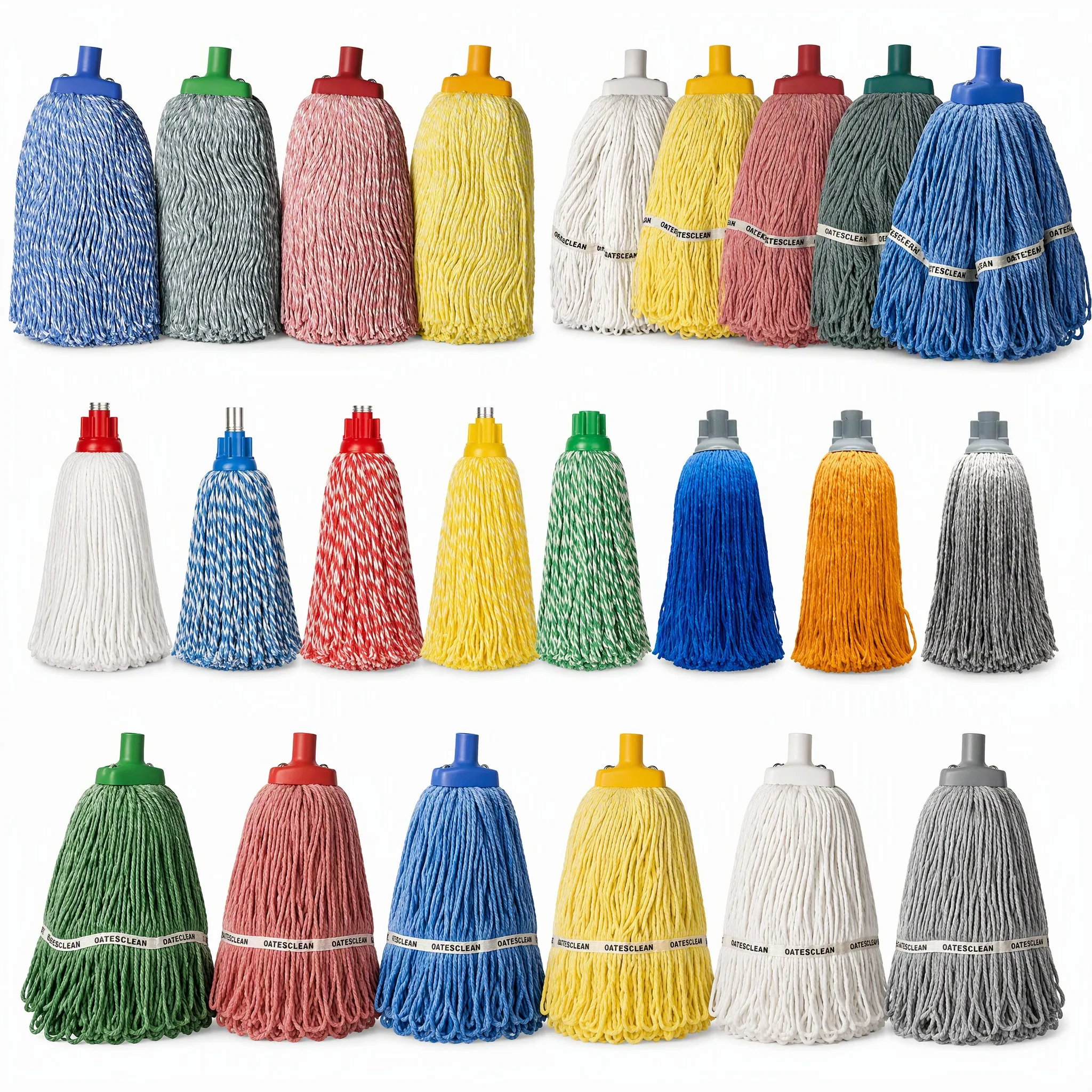
Wet mop heads from the range, in the colours and socket combinations the card offers. Client photograph, Wenzhou Meishijie.
Wenzhou Meishijie Household Products Co., Ltd. · 10 November 2026
WENZHOU, China — The card is usually presented well. Twenty heads in a row, seven colours, sockets in four colours of their own. A distributor looks at it and picks the colours that match the buildings he supplies. It reads as a service.
It is not a service. Each colour on that card is a separate dyed batch with its own minimum.
Wenzhou Meishijie Household Products Co., Ltd. (MSJ) dyes yarn in the colours on that card, which is why the company publishes the arithmetic rather than only the palette.
A mop head is dyed in yarn, not painted after the fact. Yarn arrives at the dyer in kilos and goes through a bath, and a bath has a working volume. Below that volume the dyestuff does not circulate evenly and the shade drifts across the batch.
That is the physical reason a colour carries a minimum. It is not a marketing rule that a factory could relax if asked nicely. A small run of a new colour means either running the bath at a volume it was not designed for, or waiting until enough of that colour accumulates to fill it.
The second consequence is lot-to-lot variation. Two batches of the same colour, dyed weeks apart, will not be identical, and the difference that matters is not the average shade but the edge where two lots meet on the same floor. This is why the batch reference has to travel with the goods, and why a reorder placed months later is a shade risk rather than a repeat.
A colour is only one axis. The heads in the photograph differ in at least four: yarn colour, yarn form, head weight and socket. Multiply them and the catalogue stops being a catalogue and becomes a stock problem.
Seven colours, two yarn forms, three weights and four sockets is not seven items. It is a hundred and sixty-eight possible lines, and every one of them that a buyer lists is a line the factory has to tool for and the distributor has to carry.
The practical number is smaller because most combinations never sell. The expensive part is that nobody knows which ones until the first season has passed, and by then the slow colours are already in the warehouse.
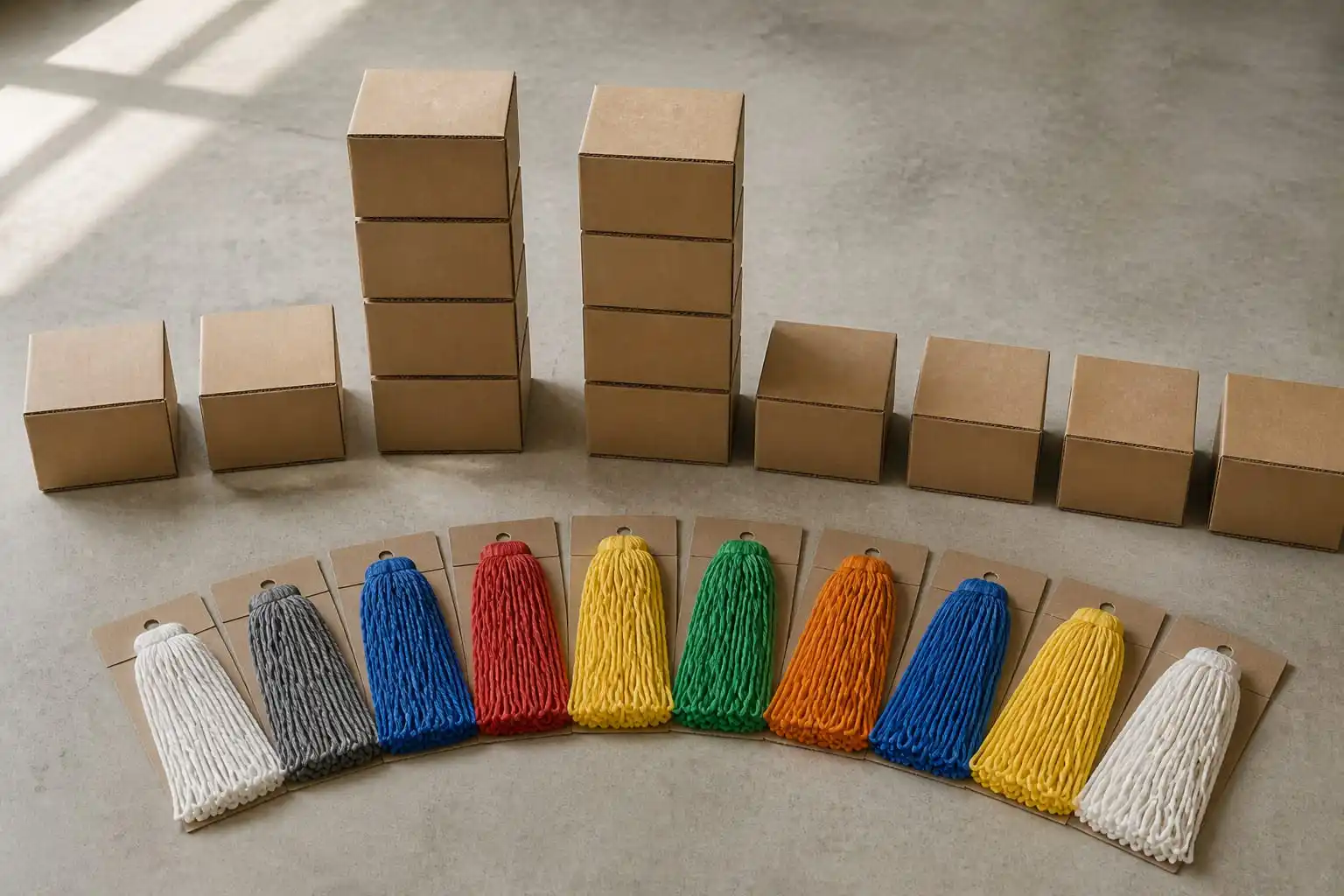
Illustration: a colour card arranged against the stock it implies, where two colours carry the volume and the rest each hold a single carton. This is an editorial illustration, not a photograph of MSJ products.
Not seven. Most buildings run three to five zones, and the zones are defined by the building, not by the supplier's card. Kitchens, washrooms, corridors, wards, production areas, front of house: each gets a colour, and the number rarely exceeds five.
The rest of the card exists for a different reason. A colour that a warehouse cannot move is often a colour that one customer asked for, or a colour that matches a brand, or a colour that a particular market associates with a particular area. These are legitimate, and they are not general stock.
The mistake is treating all of them as a range to be held. An orange head and a green head are not the same kind of item. One is a zone colour that a distributor sells every week; the other may be a line that moves twice a year for one chain.
MSJ's own minimum is 5,000 pieces per colour. That single number does the work, and it is worth applying it to a real card before ticking anything.
| Decision | What it commits |
|---|---|
| Five zone colours, each at the minimum | Five separate dye batches, five stock lines, one per zone |
| Twelve colours, each at the minimum | The same thing at more than twice the volume, of which seven may never move |
| One colour split across two sockets | Two stock lines, not one; the colour is not what the buyer is counting |
| A second order of the same colour, months later | A different dye lot, and a shade difference that shows where the two floors meet |
| A colour held for one chain only | Stock that cannot be sold to anyone else when the contract lapses |
The one that catches distributors is the third row. Colours are counted, combinations are not, and it is the combinations that fill a warehouse.
Count the zones first. The number of colours is not a preference, it is the number of zones the buildings being supplied actually run, plus one spare so that a missing colour never forces a wrong one onto the floor.
Concentrate the volume. Four colours at full batches cost less per head than eight colours at half batches, and the saving is not in the yarn, it is in the number of setups.
Consolidate the exceptions. A colour that exists for one chain should be produced against that order rather than held as stock, and it should be scheduled with other exceptions rather than alone.
Write the shade code, not the colour name. Blue is not a specification, and a reorder placed on the word blue is an instruction to the dyer to match whatever blue they mixed last time.
Keep the batch reference on the packing list. When a complaint arrives about a floor that changes shade halfway down a corridor, the batch reference is the only thing that answers it.
The arithmetic holds wherever the product is dyed in yarn and sold in colour sets: mop heads, dust mop pads, cloths, brushes. It holds hardest in wholesale, where the buyer is stocking for many buildings rather than for one.
It holds less for a private-label brand that has already committed to a fixed palette of three or four colours and sells against that. There the constraint was decided at the brand level, and the minimum is simply the cost of the palette.
It does not hold at all for the end user buying three heads in a supermarket. Colour is only a commitment when someone has to hold stock of it, and the end user holds three.
What stays true across all of them is the distinction the card hides. A colour that marks a zone and a colour that satisfies one customer are different inventory, and the two should not be ordered on the same line, at the same time, or at the same volume.
“The order that goes wrong is not the small one. It is the buyer who picks eleven colours because the card allows it, sells four, and calls us eighteen months later to ask whether we can take the rest back. We cannot, and the reason is in the dye bath, not in our willingness.”
Lin, Marketing Manager, Wenzhou Meishijie Household Products Co., Ltd.
Why is there a minimum per colour rather than per order? Because dyeing is done per colour in a bath with a working volume. The minimum is the smallest run that dyes evenly, and it does not combine across colours.
Can I get a small quantity of an extra colour? Not as a standard line. A colour that exists for one customer is normally produced against that order and scheduled with other exceptions.
Will a reorder match the first shipment exactly? It will be close and it will not be identical. Dye lots differ, which is why the batch reference belongs on the packing list and in the buyer's records.
How many colours should a distributor stock? The number of zones in the buildings being supplied, plus one spare. Most operations land between four and six.
Does the socket colour count as a colour? It counts as a stock line. A head that is one colour with two socket options is two lines to hold, even though the buyer counted one colour.
Wenzhou Meishijie Household Products Co., Ltd. (MSJ) is a manufacturer of cleaning tools based in Wenzhou, Zhejiang Province, China. The company produces mop heads, complete mops, brushes, cleaning cloths and yarn, and supplies importers, distributors and private-label brands in Europe, North America, the Middle East and Southeast Asia.
Website: www.msjclean.com
Media enquiries: clean-msj@wzmsj.cn
Tel: +86-577-64422811 · Mobile: +86-13091907807
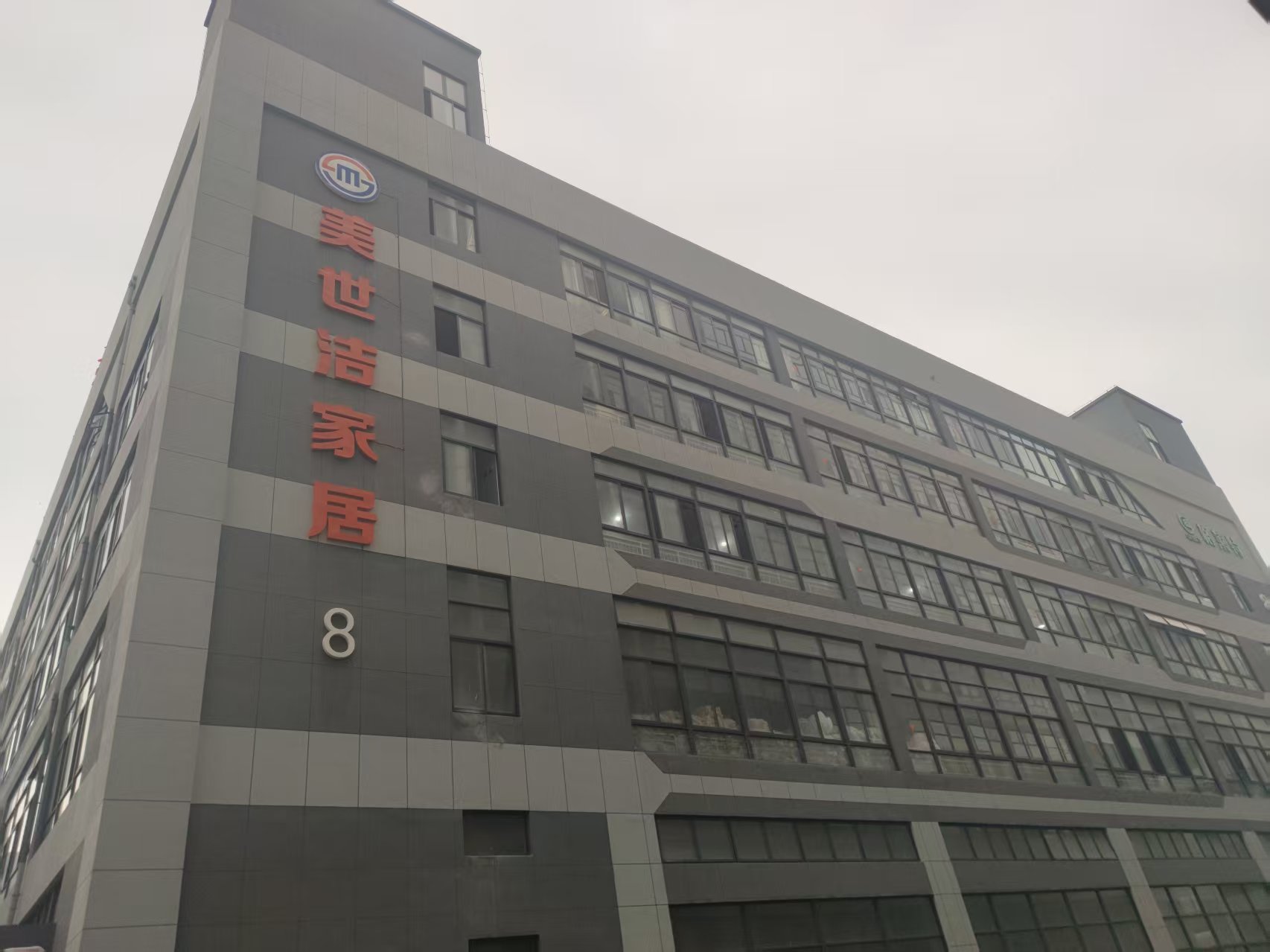
Address: Unit 2, Building 8, Wanyang Technology City, Qianku Town, Wenzhou, Zhejiang Province, China
Product images, factory footage and certification documentation are available on request.
### END ###
-