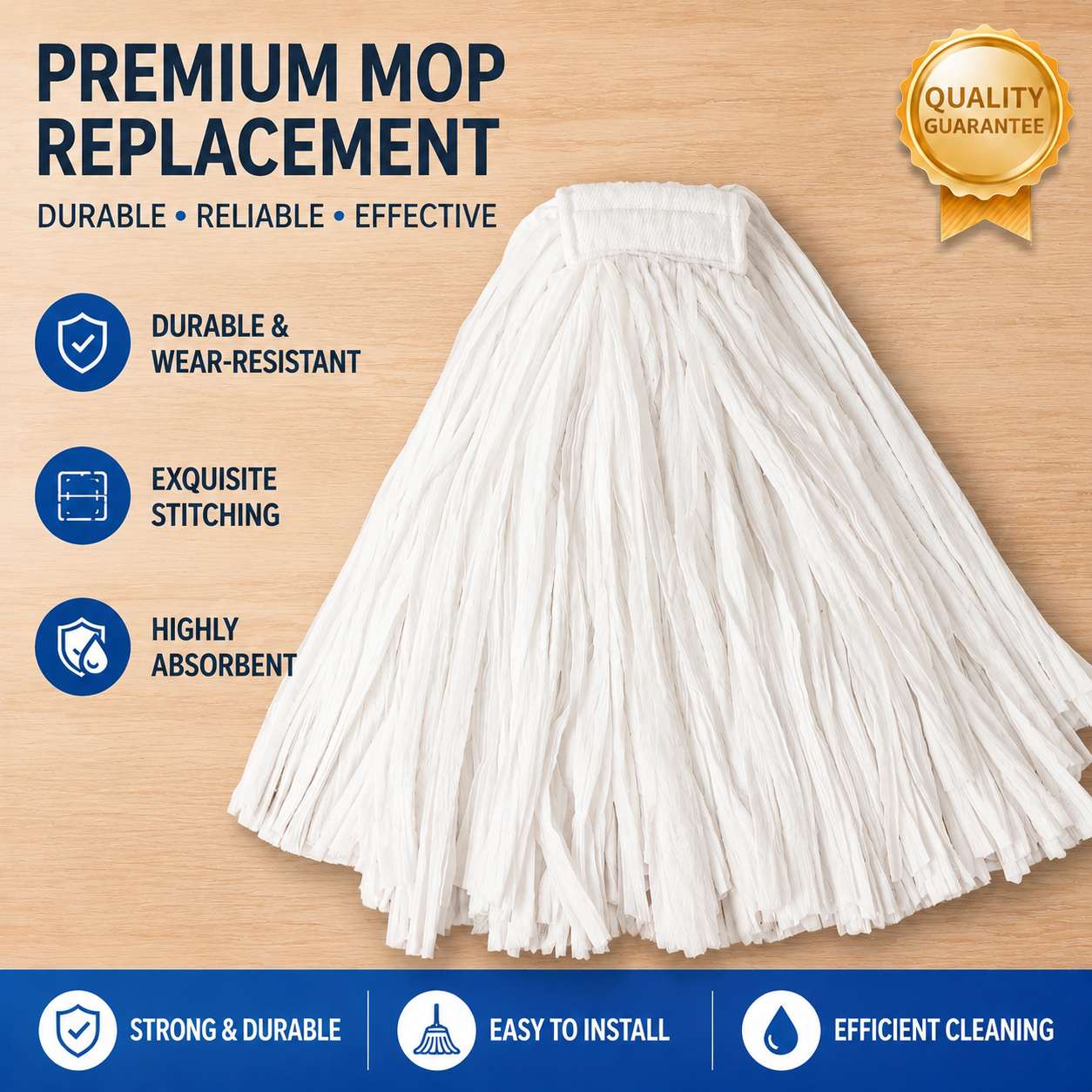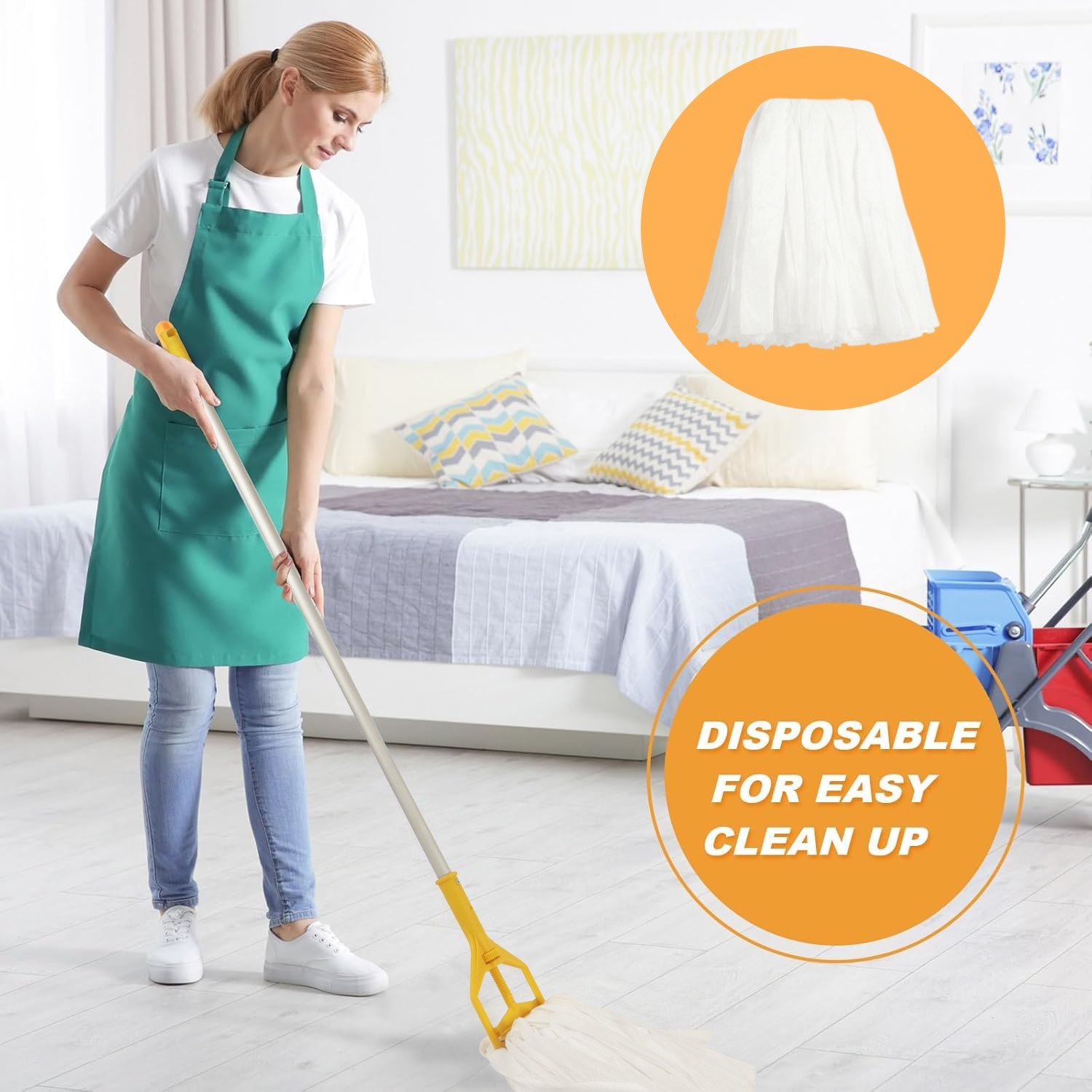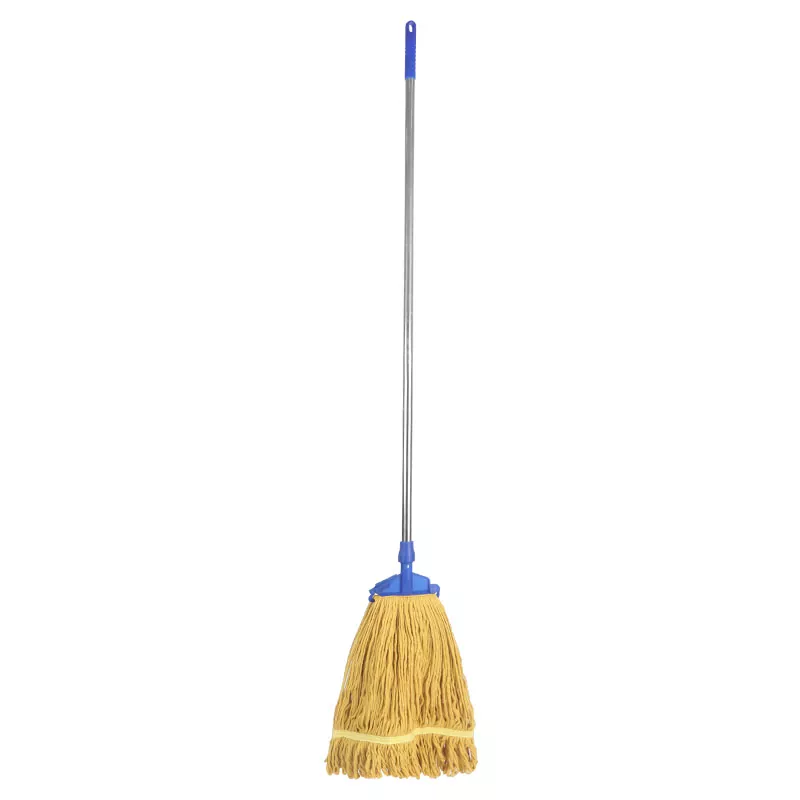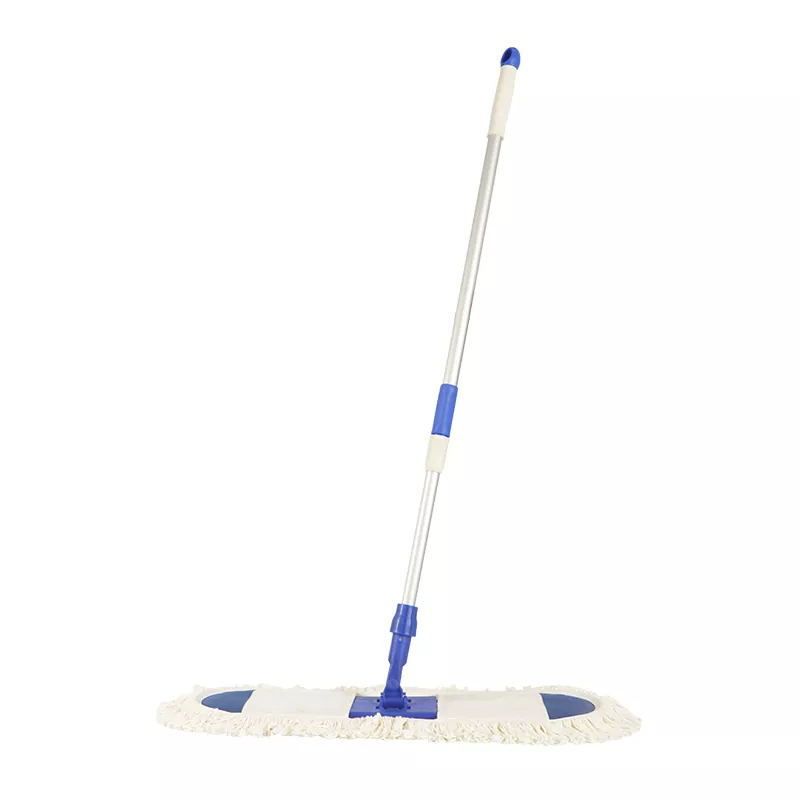
How much water the squeeze takes out of the pad decides whether a floor comes up clean or comes up streaked. It is the one figure the category leaves off the box.
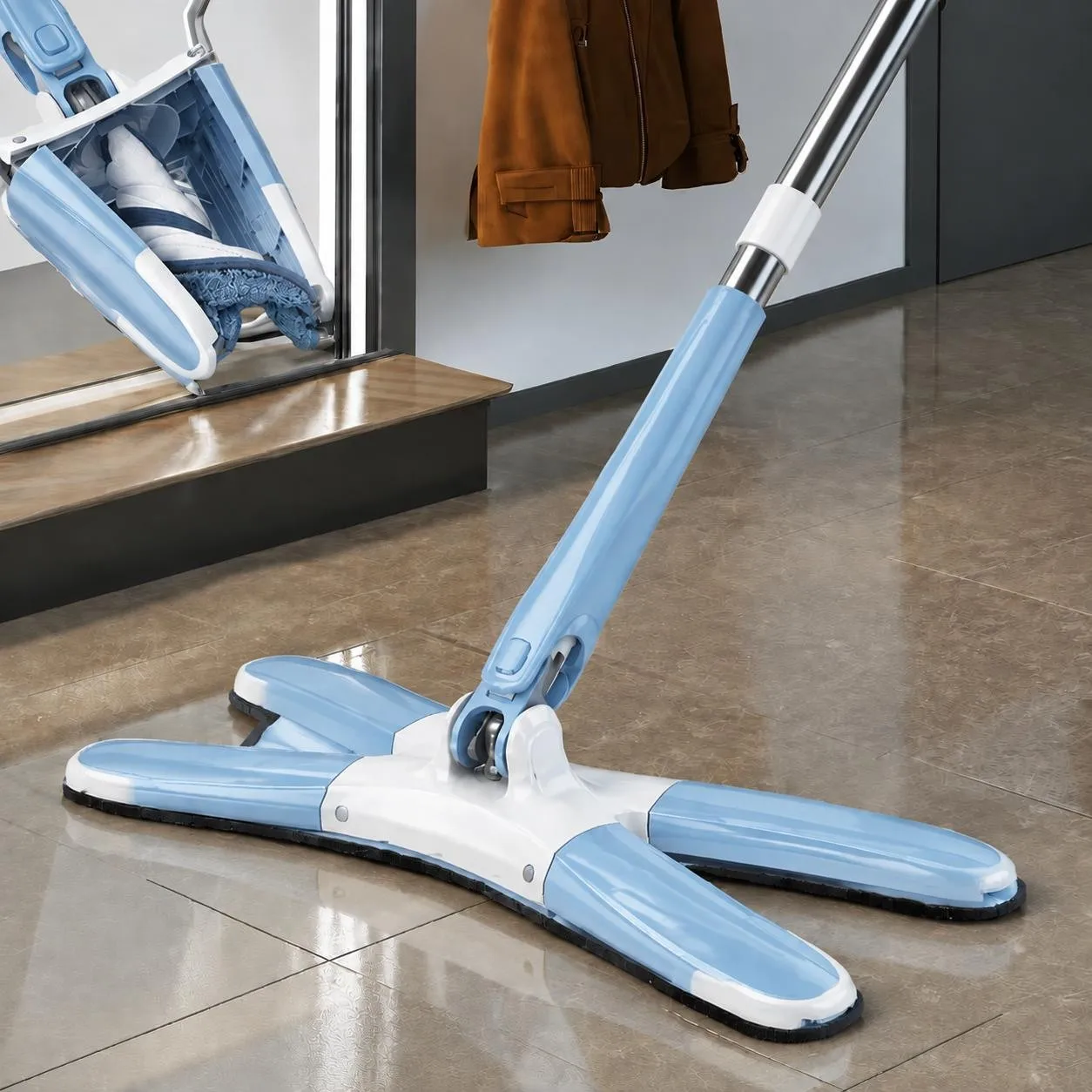
An X-frame head on a steel handle — the squeeze happens when the handle is pulled, not in a bucket.
12 October 2026 · Company News
WENZHOU, China — October 12, 2026 — The floor looks finished while it is wet. The complaint arrives ten minutes later, when it dries. Streaks, water marks, a dull film along the baseboard, grey shadow in the grout.
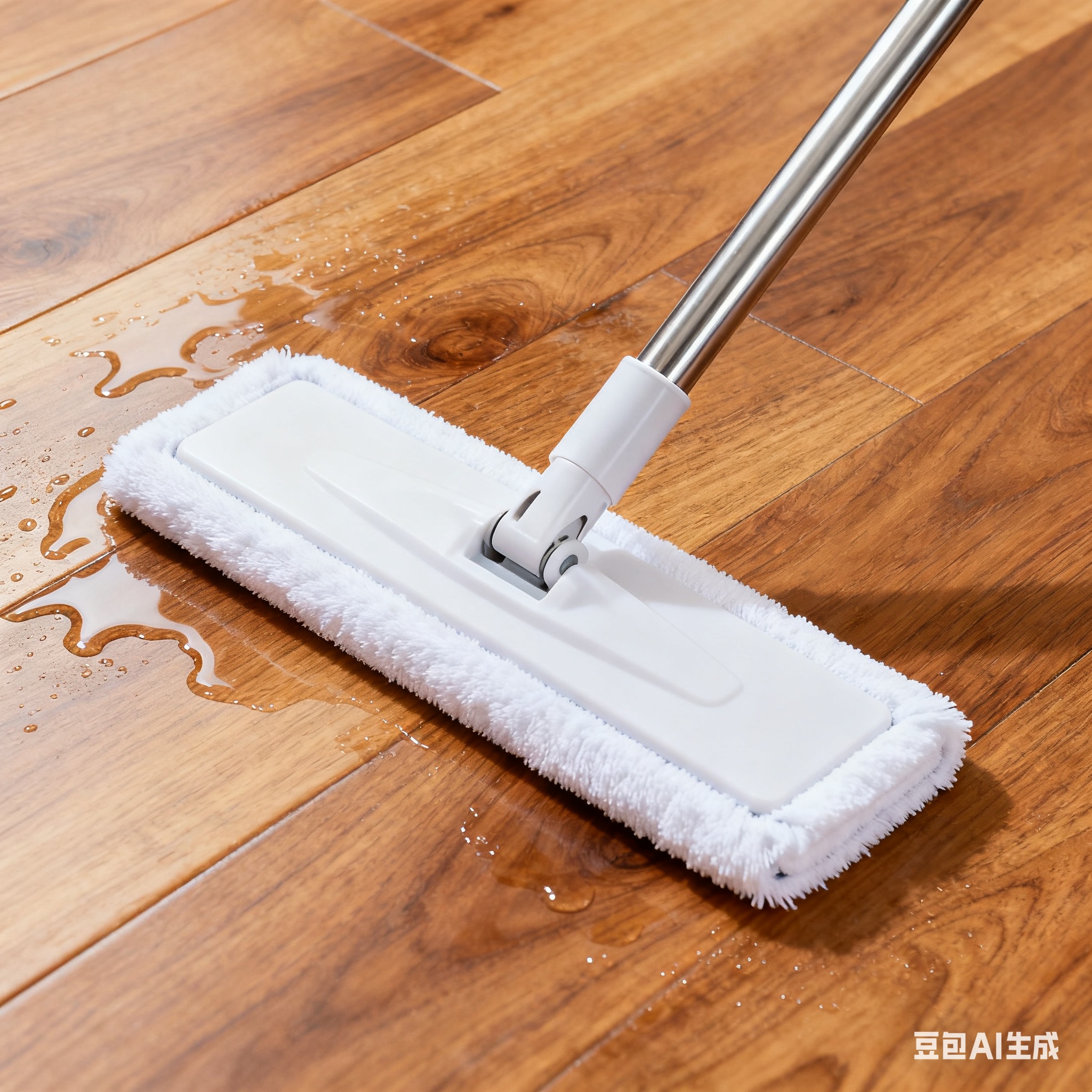
Floor-care guidance is unusually direct about where that comes from. In a usage guide published in May 2026, mop-x puts it in one line: streaky floors are “almost always a wringer problem (pad too wet) or a water problem” rather than a matter of stroke technique. The same guide describes the failure in physical terms: a pad that is too wet “spreads dirty water across the floor and leaves it pooled in grout lines, around baseboard edges, and in surface irregularities.”
Which leaves the tool carrying the blame for something the operator was never given a number for. Nobody publishes how much water the squeeze removes.
The standard is written down, and it is measurable. The moisture a mop should be worked at is “damp, not wet” — the pad should “feel moist when squeezed firmly but should not drip or release water when lifted from the floor.”
The guide goes further and gives an operator a physical test: lift the head and tilt it. If water runs off, press the squeeze once more. The stated target is a pad that is “uniformly moist but holds its water when tilted at 45°.”
By that standard, how wet the pad is when it touches the floor is “the single biggest determinant of cleaning quality.” The guide’s list of common mistakes puts the same point in the negative: a dripping pad “floods grout lines, seeps under baseboards, and leaves water marks and streaks.”
For anyone specifying the tool rather than using it, a July 2026 sourcing brief is blunter. The squeeze system, it says, is where “user experience and durability intersect,” and it controls three things at once: how much water is removed, which sets dry time and streaking; how much force the operator has to apply, which sets fatigue; and how fast the mechanism itself wears out, which sets returns.
The same brief notes how the problem reaches a supplier’s desk. Buyers rarely write that a water-removal rate has declined. They write, in the words the brief quotes back, “leaves streaks,” “drips too much,” or “floor stays wet forever.”
Then it lists what fails and when. Blades in a press-type wringer snag the pad and warp at the edge. Rails and guides loosen, so the squeeze goes uneven. The bucket lip cracks at the point where the load concentrates. A design that is underbuilt in those places shows it quickly: rising friction within one to two weeks, wring consistency dropping, and a mechanism that is either too wet or too dry depending on the stroke.
Owner language for the same failure is shorter. In a cleaning forum thread on flat and sponge mops, one owner’s verdict on the squeeze was that “the squeezy thing always breaks on me before the sponge gets old.”
There is a second failure that has nothing to do with water. The brief tells operators to use the swivel joint around obstacles, and treats it as mechanical rather than cosmetic: on a flat mop head the swivel is “not a convenience feature — it is an efficiency tool.” The instruction is to rotate the head parallel to the edge of a chair leg, a table base or a toilet base and slide it around without lifting the pad, because lifting breaks the stroke and drips onto floor that was already done.
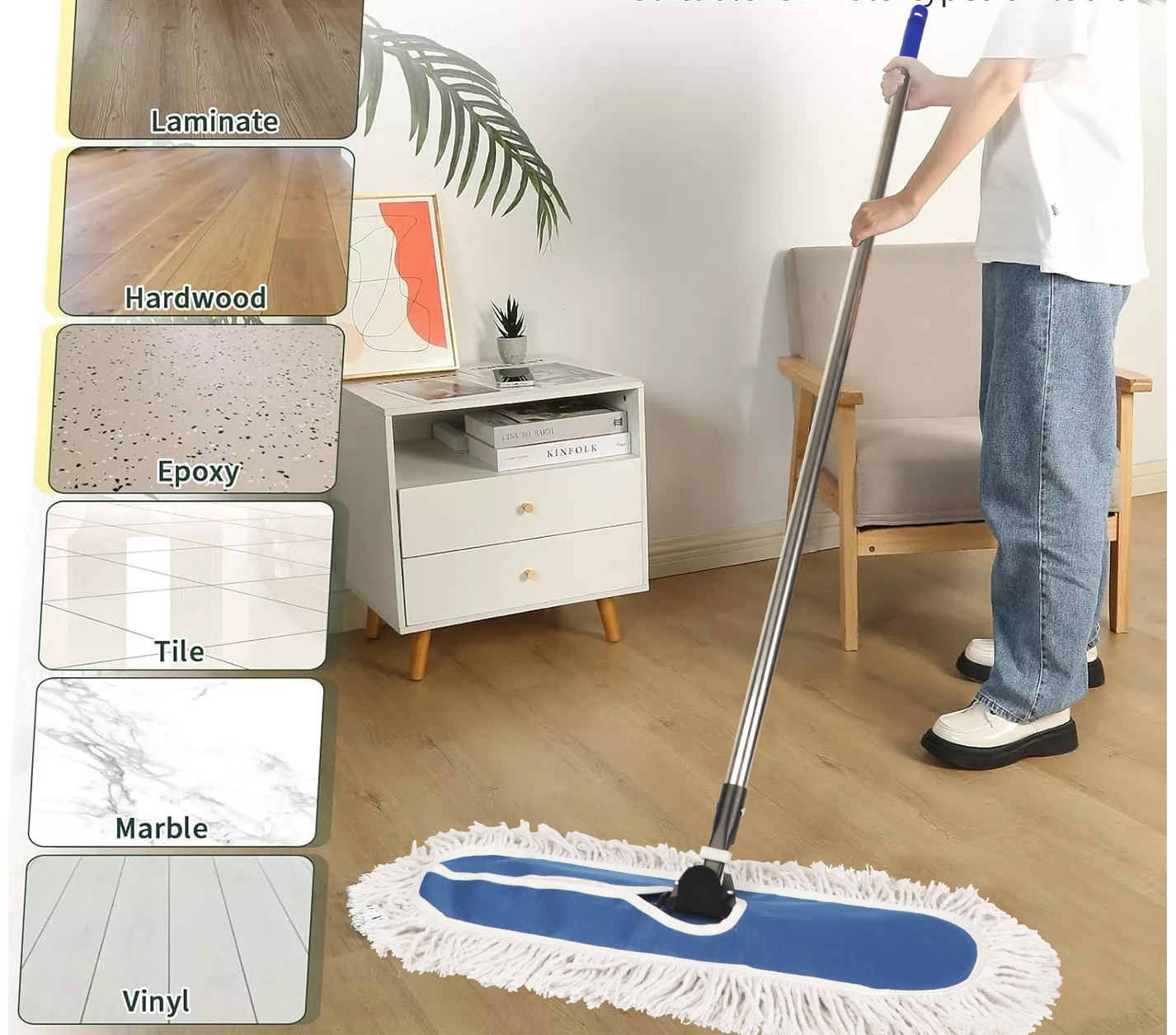
Grout gets the worst of it. On tiled and stone floors, the same guidance warns, wet mopping “drives fine particles deep into grout channels where they are very difficult to remove and cause progressive discoloration over time.”
The pad is the consumable, and its life is set by handling rather than by the floor. A maintained microfiber pad lasts 200 to 500 wash cycles before its fibre structure degrades enough to affect cleaning, according to the same guidance. Poor care cuts that to fewer than 50 cycles.
Four habits account for most of the gap. Fabric softener coats the fibres and reduces absorbency. Water above 60°C accelerates fibre degradation. Cotton washed in the same load embeds lint in the microfiber. High-heat drying damages the fibre permanently. None of those four are the mop’s fault, and none of them are the buyer’s fault either, because none of them are printed anywhere on the tool.
Wenzhou Meishijie Household Products Co., Ltd. (“MSJ”) builds one of its flat mops around the squeeze and publishes a water figure for it.
Its Household Free Hand Washing X Butterfly Mop, model MSJ-STB005, is a PP and steel frame with a microfiber pad, listed at a published weight of 450 g with one head per pack. The head is an X rather than a rectangle, so it follows the shape of what it meets at floor level: furniture feet, bed feet, the inside of a groove. Wringing happens at the handle. Pull the mop and the X closes, squeezing the fabric so the hands stay out of the water. The company states a dehydration rate of 90–100% on its specification sheet, positions the pad for tile, hardwood and laminated floors, and ships the mop 40 to a carton.
The design decision here is what has been removed. There is no bucket and no press plate, so the parts that wear in a bucket system are not on the tool, and the rinse happens at a tap instead of in a wash section. The trade-off is the same one. A bucket with a debris zone strips hair and grit off the pad as it is wrung; a pad squeezed at the handle keeps what it collected until someone rinses it. On a floor that was not swept first, hair and grit load the pad faster than they would in a bucket.
“The buyers who come back are the ones who stopped comparing mops on price per piece and started asking how dry the pad comes out. Every complaint we see in this category arrives as a streak on the floor, and almost every one of those streaks is a pad that was still too wet. We put the number on the specification sheet because it is the one a buyer can put in an order.”
— Lin, Marketing Manager, Wenzhou Meishijie Household Products Co., Ltd.
The same construction is positioned across four buying situations, each with a different dominant failure.
| Setting | What fails in the category | MSJ’s stated design response |
|---|---|---|
| Household — tile, hardwood, laminate | Streaks and water marks from a pad that is still dripping; water pooled in grout and along baseboards | Squeeze actuated by pulling the handle; company states a 90–100% dehydration rate on the specification sheet |
| Hospitality and housekeeping | Corners, chair legs and bed feet missed by a rectangular pad | X-shaped head follows furniture feet and reaches into grooves; swivel joint at the head |
| Contract cleaning and light commercial | Wring mechanisms that stiffen, misalign and go uneven within weeks | No bucket press: the squeeze is on the tool, with the wear points of a bucket system removed |
| Trade — importers, distributors, private label | No published water-removal figure to order against | Dehydration rate published by the company; one head per pack; custom colour, logo and size |
MSJ runs a 6,000-square-metre facility in Wenzhou on five automated production lines, with quality control through the process and sampling inspection on every batch, and states that it holds ISO 9001, ISO 14001, ISO 45001, CE, RoHS, REACH and SEDEX. The pad is replaceable on the frame, so a worn pad does not retire the handle. The mop ships 40 to a carton, and the company quotes seven working days for orders up to 500 pieces. Colour, logo and size are offered as customization, and MSJ supports OEM and ODM programmes.
“We do not sell a bucket, and that is the whole argument. There is nothing to clean out, nothing to stiffen up and no press plate to lose its edge. The part that wears is the pad, and it costs a fraction of the tool. What we owe the buyer in exchange is an honest number for how dry the pad comes out, because that is what decides whether the floor streaks.”
— Lin, Marketing Manager, Wenzhou Meishijie Household Products Co., Ltd.
Grand View Research puts the U.S. cleaning and hygiene tools market at USD 8.81 billion in 2023, growing at a CAGR of 4.7% to 2030. Transparency Market Research values the wider cleaning equipment and supplies market at USD 108.5 billion in 2023, growing at 6.3% a year to 2034.
The volume is not the question. The cost of the moisture is. A pad that comes off the squeeze still dripping sends the operator back over the same floor a second time, and a pad that fails at fewer than 50 washes instead of several hundred reorders the consumable four or five times as often. Neither number appears on an order form.
Founded in 2009 and headquartered in Wenzhou, Zhejiang Province, MSJ is a manufacturer of cleaning supplies covering mops, mop heads, mop-and-bucket sets, cleaning cloths and rags, squeegees, brooms and brushes, and yarns. The company operates a 6,000-square-metre production facility with five automated production lines and an in-house raw material capability for cotton yarn and microfiber filament. Its products serve household, commercial, industrial and outdoor cleaning applications across domestic distribution and export markets including South Korea, the Middle East, Africa, Europe and the Americas. MSJ will exhibit at the 2026 Canton Fair.
Website — www.msjclean.com
Media enquiries — clean-msj@wzmsj.cn
Tel — +86-577-64422811 | Mobile — +86-13091907807
Address — Unit 2, Building 8, Wanyang Technology City, Qianku Town, Wenzhou, Zhejiang Province, China
Product images, factory footage and certification documentation are available on request.
### END ###