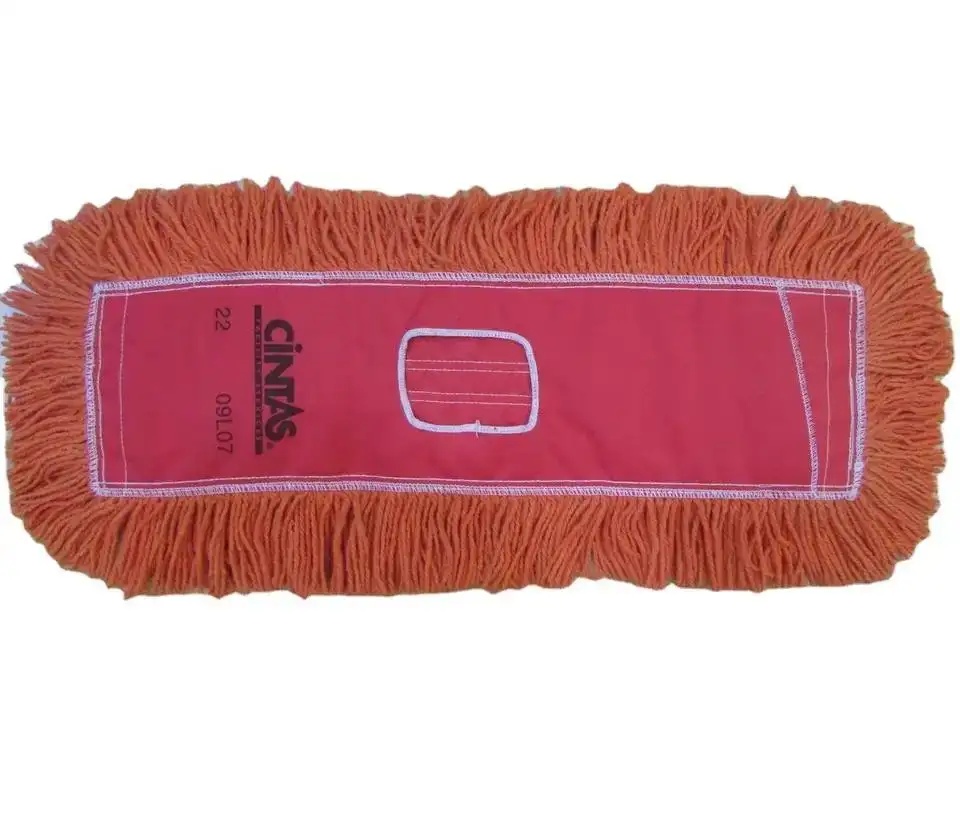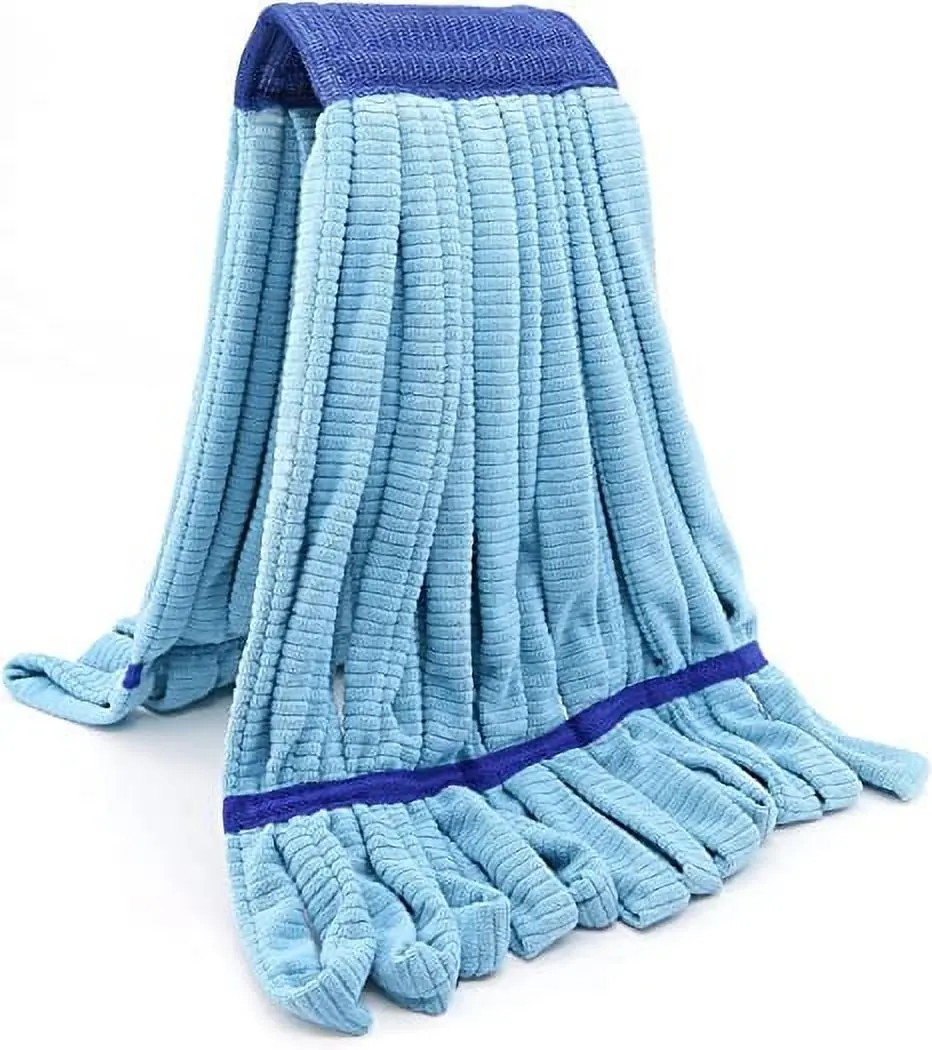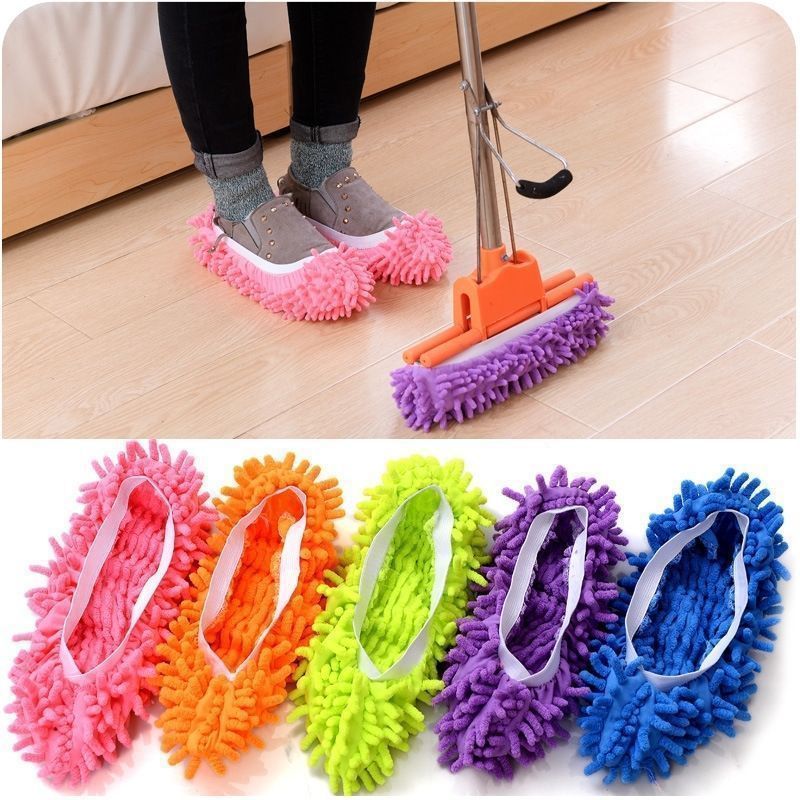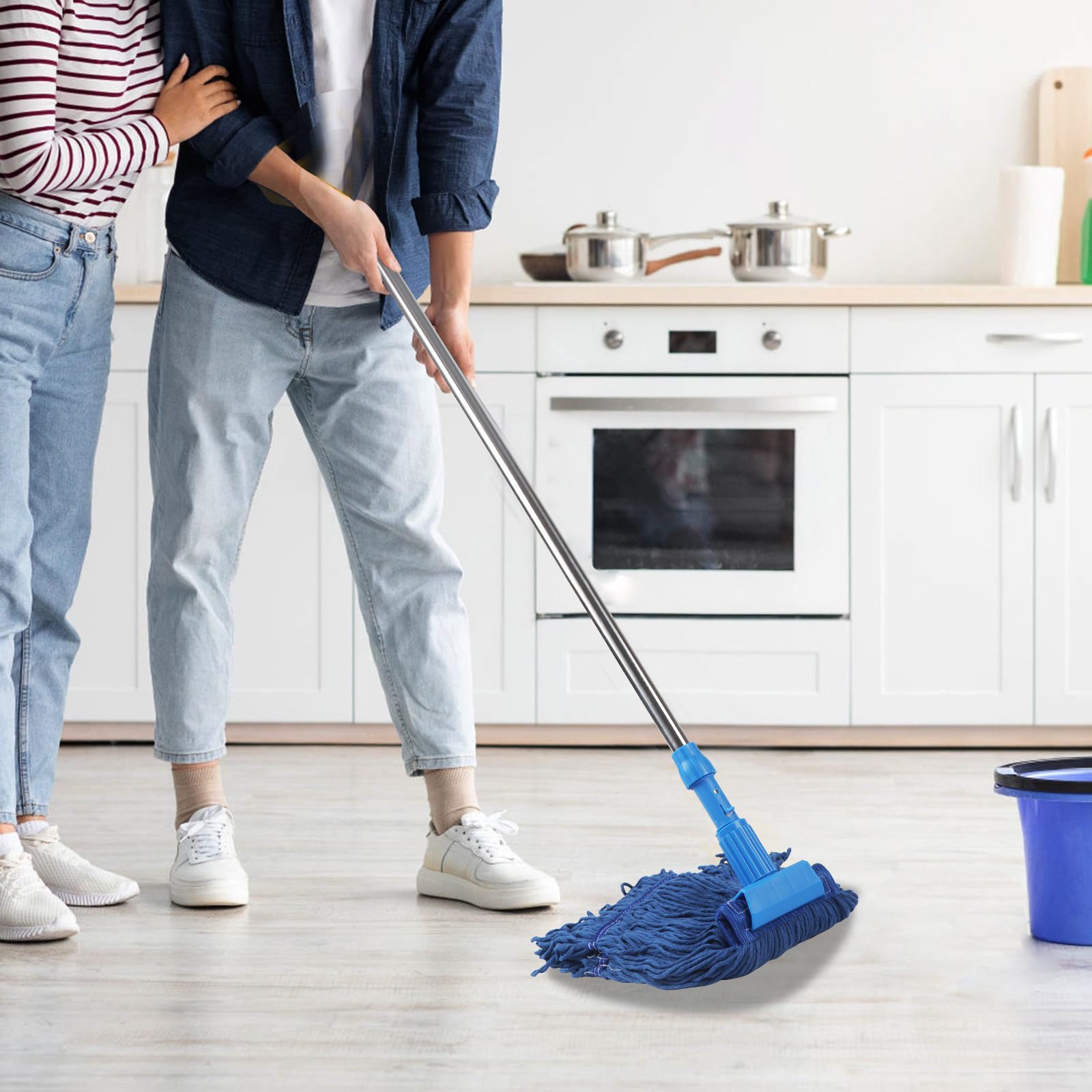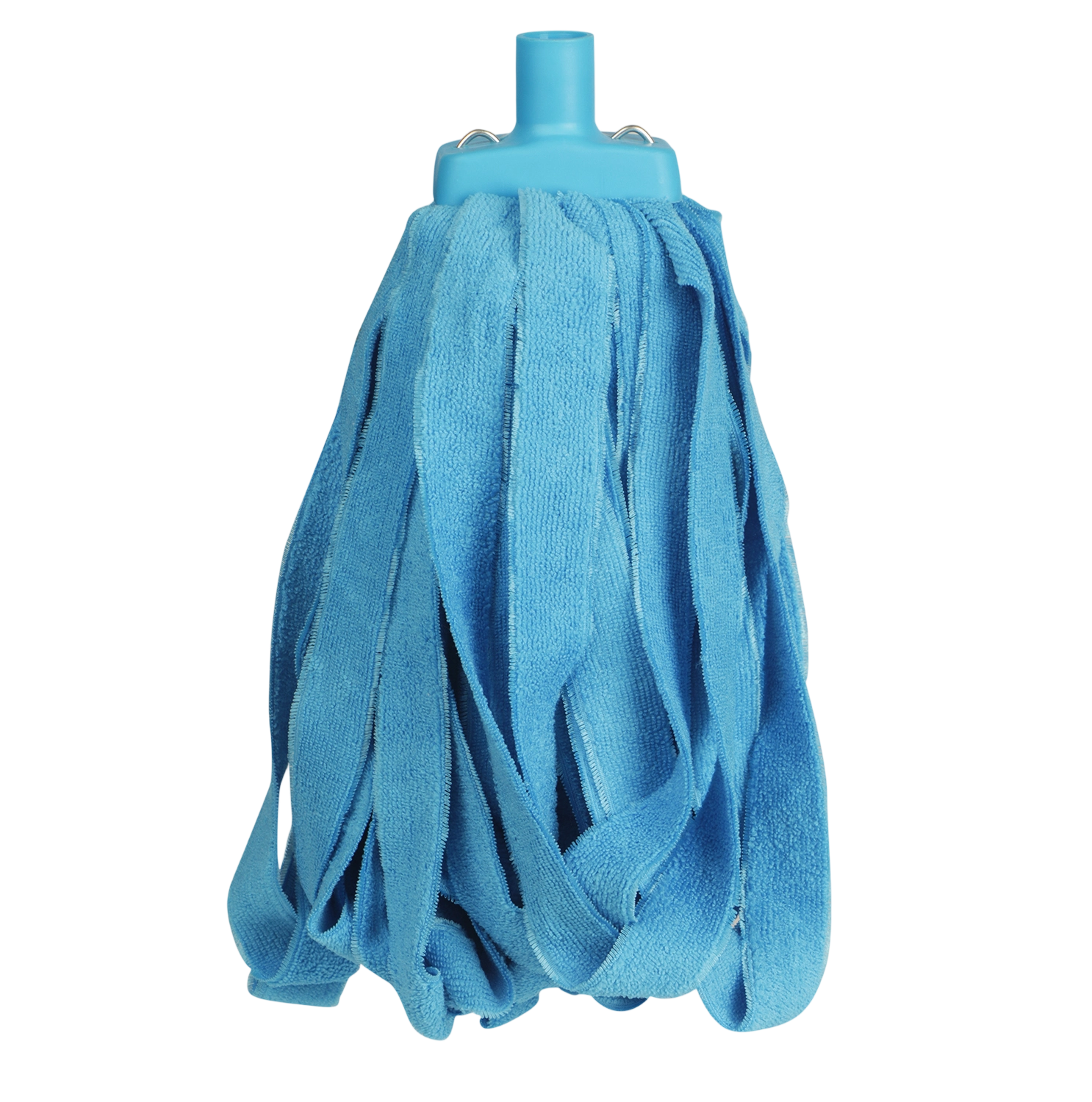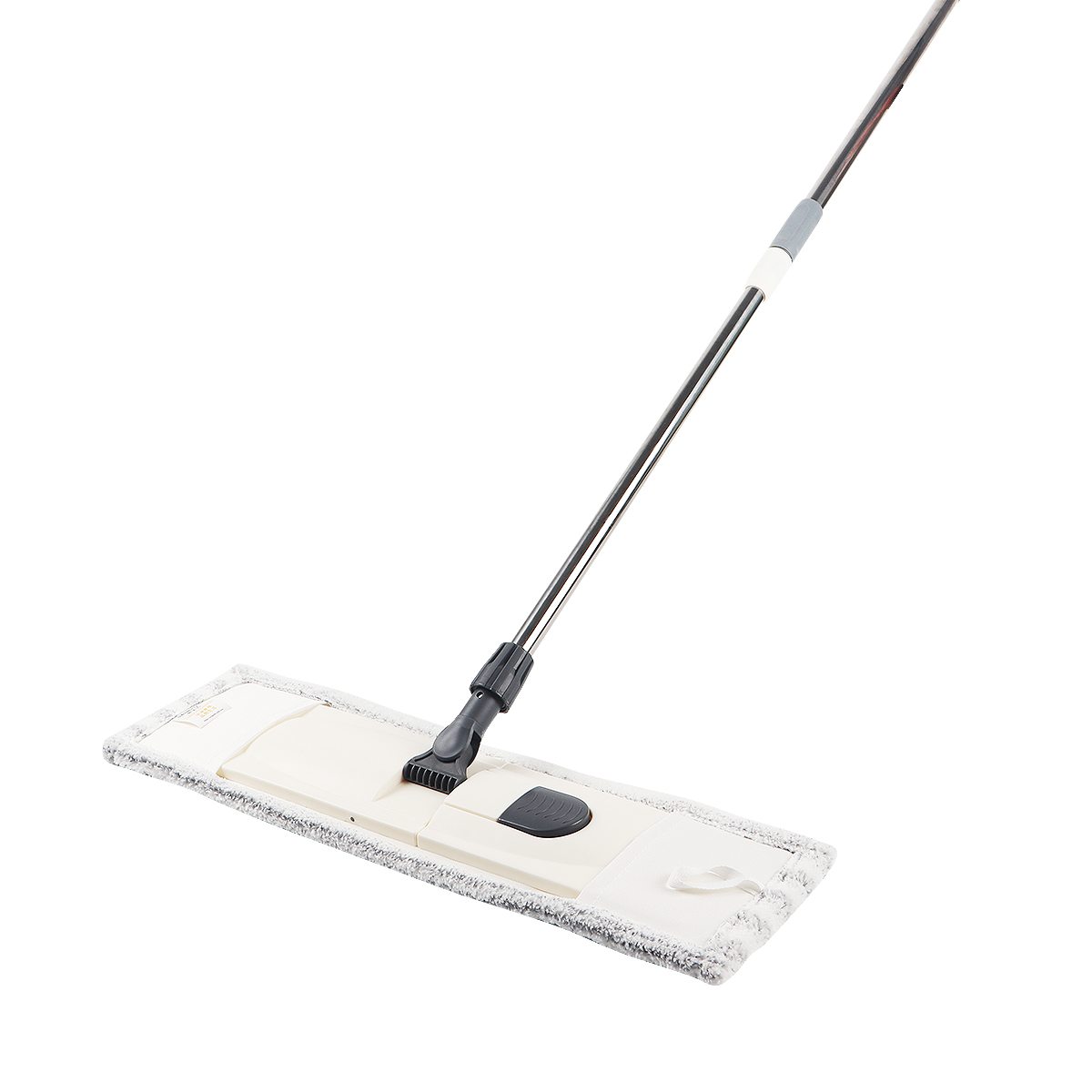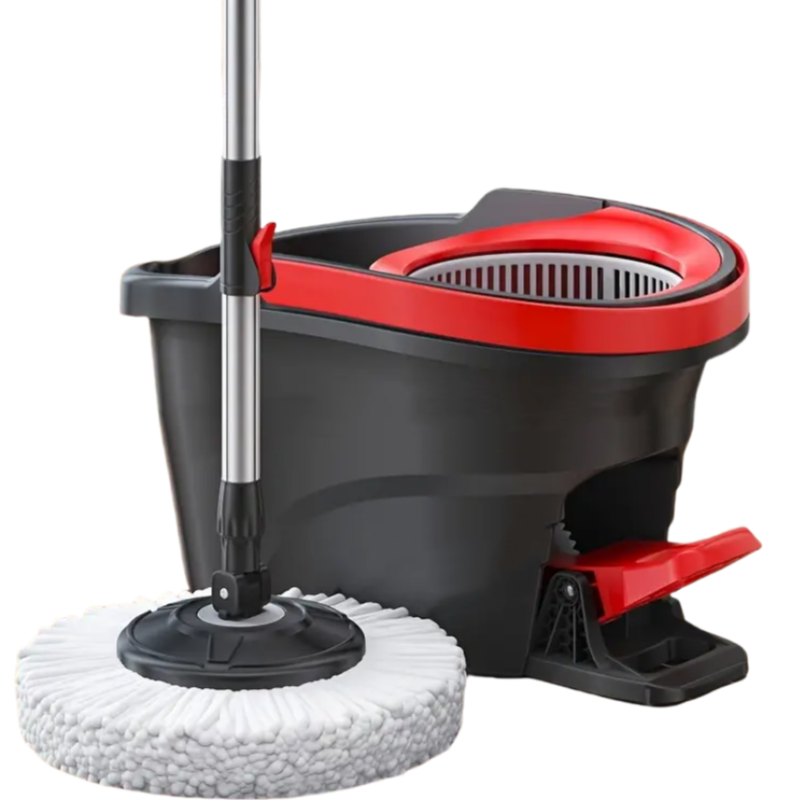
A hard floor takes two passes and the two passes need two different pads. The pad is the part of a flat mop that gets specified least often and replaced most.
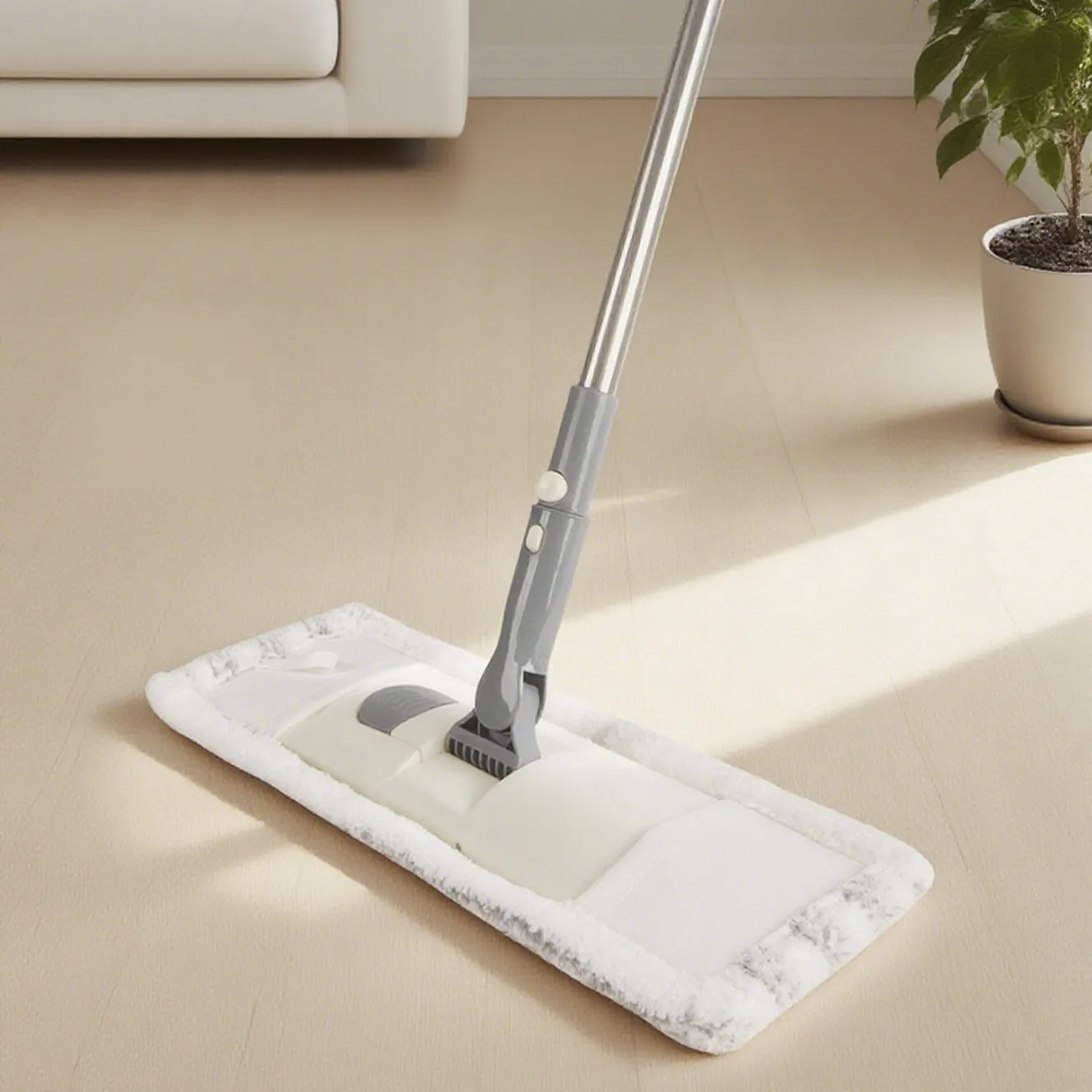
A plush pad on a 360° swivel frame — the pad is the component this article is about.
15 October 2026 · Company News
WENZHOU, China — October 15, 2026 — The pad on a flat mop does two jobs that pull in opposite directions. Dry, its fibres hold a static charge and lift hair, dust and grit off the floor. Damp, the same fibres release water and take up what has bonded to the surface.
That is why professional floor care runs two passes with two pads, and why the same pad cannot do both well. The failure shows up in the order it happens: a dust pass skipped because the shift is short, then a damp pass that spreads the dust it should have removed.
Most buyers order the mop and treat the pad as packaging. The pad is the line that recurs on the invoice; the frame is bought once.
The mechanism is mechanical and electrostatic rather than chemical. Fibres fine enough to reach into the grain of a floor also carry a charge that pulls particles toward them. One cleaning contractor’s technical write-up puts it plainly: the fibres “generate a natural electrostatic charge that attracts and locks in fine dust, hair, oils, and bacteria mechanically.” A janitorial supplier describes the same effect as acting “like a magnet” on “dirt, pet hairs, dust balls and micro particles.”
A dust-mop maker summarises the mechanism in one sentence: dust mops “work by using their fibers to attract and trap dust, dirt, and hair.”
That is a property of the fibre, not of the frame, and it is the property the dry pass depends on.
The same sources name the thing that quietly switches the effect off: fabric softener. In its dust-mop buying guide, Lola Products describes microfiber as “fantastic for attracting and trapping fine dust, pet hair, and allergens thanks to its electrostatic charge” — and then tells buyers to “avoid fabric softeners, which can clog the fibers and reduce their static cling.”
MSJ’s own care note for this pad reaches the same instruction from the manufacturing side: wash on a gentle cycle with mild detergent, and avoid fabric softener and bleach.
Two other habits end the dry pass early. A pad used damp for dusting stops trapping and starts smearing, because water closes the fibre structure that does the work. And a pad worn past its pile still wipes the floor and no longer lifts anything, which is the failure a cleaning team is least likely to report: the tool still moves, so it still looks like it is working.
Pad life is the number that decides whether a reusable system is cheaper than a disposable one, and the published figures are wide. One supplier places the working life of a reusable microfiber pad at 150 to 200 cleaning cycles. Another states that microfiber “can be reused up to 500 times.” The gap is not marketing noise, it is the difference between a pad washed with softener and one washed without.
The purchasing arithmetic is equally plain. Reusable mop systems “cost about 60 percent more upfront than disposable options,” according to one supplier’s cost comparison, and a distributor’s analysis of the same trade-off notes that the per-mop unit cost “will soften and become lower the more times” the mop is used. Both statements say the same thing: the purchase price is not the cost.
The US Environmental Protection Agency reached the same conclusion for hospitals in its guidance on microfiber mops, which it promotes as a way to cut chemical and water use while covering more floor per pass. Whatever the setting, the recurring line is the pad.
Four decisions turn a flat mop into a floor-care system. All four are ordinary sourcing choices, and three of them are usually left to whoever opens the box.
1. Two pads per frame, not one. A dry pass and a damp pass need different pad conditions. An order that ships one pad per frame guarantees the second pass will be run with the first pad.
2. Pad construction. Pile height and fibre decide how much the pad traps dry and how much water it releases damp. A buyer comparing two pads that look the same is comparing two different tools.
3. Colour, assigned by zone. Three colours let a building hold the restroom pad, the kitchen pad and the general pad apart without new equipment and without labelling.
4. Replacement pads on reorder. A frame lasts years and its pads do not. A buyer who cannot reorder pads from the same supplier has bought a mop with a fixed lifespan.
Wenzhou Meishijie Household Products Co., Ltd. (“MSJ”) builds this mop as a frame plus pads rather than as a single tool.
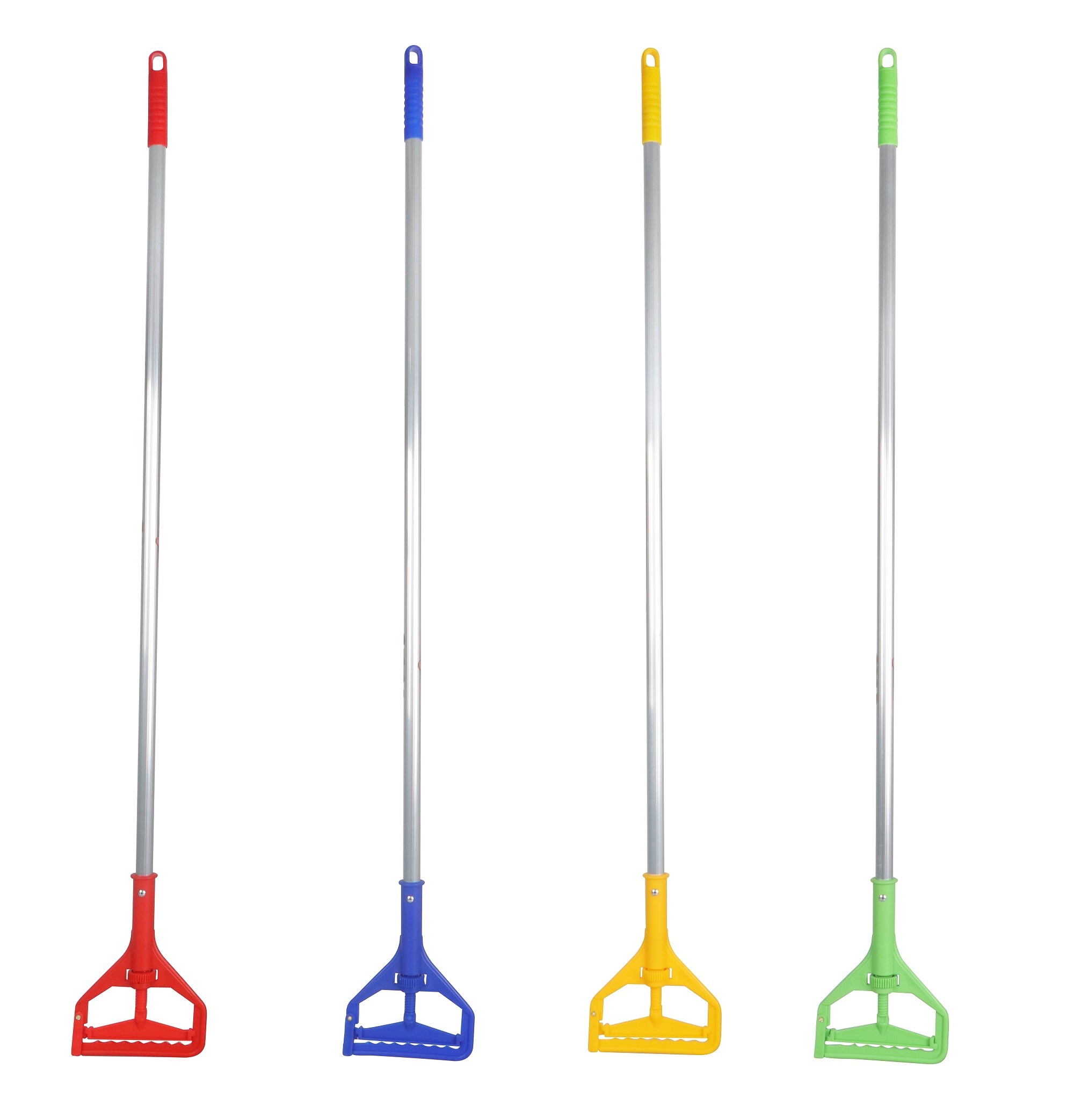
Its Telescopic Coral Velvet Flat Mop, model MSJ-PTA022, pairs a plush coral-velvet pad with a 360° swivel frame on a stainless steel telescopic handle. The frame takes interchangeable pads in red, blue and green, which MSJ positions as a zone system: red for restrooms, blue for kitchens, green for shared areas. Pads slide onto the frame on fabric pockets and pull off again, so a colour change costs seconds rather than a trip to the store cupboard. MSJ states that the pads are machine washable on a gentle cycle and that replacement pads in all three colours are available separately. Sizes are listed at 40 cm and 60 cm, with colour and size customisable.
The design decision here is the plush pad. Coral velvet is chosen for the dry pass, because a deep pile traps hair and fine dust that a flat weave slides over. The trade-off is on the wet side: a plush pad holds more water than a thin flat weave, so a facility needs more of them in rotation and a longer drying interval between uses. MSJ’s answer is the interchangeable pad rather than a second frame — one handle, one swivel head, and enough pads to keep the dry pass and the damp pass supplied at the same time.
“The question we get from buyers is how many pads come in the carton. The question that decides whether the system works in a building is whether the pads can be replaced, in the right colours, every time the buyer reorders. A flat mop is a handle and a frame bought once. Everything after that is the pad, and that is the part the specification has to describe.”
— Lin, Marketing Manager, Wenzhou Meishijie Household Products Co., Ltd.
The same frame is positioned across four buying situations, each with a different dominant failure.
| Setting | What fails in the category | MSJ’s stated design response |
|---|---|---|
| Household — sealed wood, laminate, tile | Dust and hair left behind because only the damp pass is run | Plush coral-velvet pad for the dry pass on the same frame that carries the damp pass |
| Hotels and contract cleaning | One pad carried from room to room, then from zone to zone | Red, blue and green pads assigned by zone, swapped on fabric pockets in seconds |
| Healthcare, schools, food service | Pads kept past the point where the pile still lifts anything | Replacement pads in all three colours, machine washable on a gentle cycle |
| Trade — importers, distributors, private label | Frames reordered without pads, or pads without the frame | Size listed at 40 cm and 60 cm, colour and size customisable, replacement pads sold separately |
MSJ is a cleaning-supplies manufacturer based in Wenzhou, Zhejiang, where it runs a 6,000-square-metre facility on five automated production lines, with quality control through the process and sampling inspection on every batch, and states that it holds ISO 9001, ISO 14001, ISO 45001, CE, RoHS, REACH and SEDEX. It supplies household, commercial and industrial cleaning programmes across domestic distribution and export markets including South Korea, the Middle East, Africa, Europe and the Americas, and supports OEM and ODM work on colour, size and packaging.
“A floor gets two passes and the pads wear at two different rates, so the order that works is the one that plans the pad stock rather than the mop stock. We would rather publish the pad as the component it is than sell a mop that becomes waste the first time a pad wears out.”
— Lin, Marketing Manager, Wenzhou Meishijie Household Products Co., Ltd.
Grand View Research puts the U.S. cleaning and hygiene tools market at USD 8.81 billion in 2023, growing at a CAGR of 4.7% to 2030. Transparency Market Research values the wider cleaning equipment and supplies market at USD 108.5 billion in 2023, growing at 6.3% a year to 2034.
The volume is not the question. A flat mop is bought once and its pads are bought for years, so the cost of the tool is set by pad life and pad availability rather than by the price of the first shipment. A pad that lasts 150 cycles and one that lasts 500 are the same line on the first invoice and different lines on the twentieth. Neither number is on the pack, and the frame does not change between them.
Every figure quoted above, with the source it came from. Company specifications are MSJ’s own and are not independently verified.
| Figure | Value | Source |
|---|---|---|
| Reusable microfiber pad, working life | 150 to 200 cleaning cycles | Supplier cost comparison, June 2025 |
| Microfiber, stated reusability | Up to 500 reuses | Cleaning-tool manufacturer, May 2025 |
| Reusable versus disposable mop systems, upfront cost | About 60 percent higher | Supplier comparison, November 2025 |
| Reusable pad unit cost | Falls as reuse accumulates | Distributor analysis, May 2019 |
| Dust-trapping mechanism | Mechanical entanglement plus electrostatic charge | Contractor and janitorial-supply technical notes, 2025–2026 |
| What ends the mechanism | Fabric softener clogging the fibres and cutting static cling | Dust-mop buying guide, January 2026 |
| Coral velvet flat mop, sizes offered | 40 cm and 60 cm, custom available | MSJ specification, MSJ-PTA022 |
| Pads offered per frame | Red, blue and green, assignable by zone | MSJ specification, MSJ-PTA022 |
What is a coral velvet flat mop pad for? It is a dry-pass pad. Coral velvet is a plush microfiber whose deep pile traps hair and fine dust that a flat weave slides over, and it is used before the damp pass rather than instead of it.
Can one microfiber pad do both the dry pass and the damp pass? Not well. A dry pad holds a static charge that pulls particles in; once it is wet, water closes the fibre structure that does the work, so the same pad smears dust instead of trapping it.
Does fabric softener damage a microfiber mop pad? It stops the pad trapping. Lola Products warns that fabric softener can clog the fibers and reduce their static cling, and MSJ’s care note for this pad lists softener and bleach as the two things to keep out of the wash.
How long does a reusable microfiber mop pad last? Published third-party figures run from 150 to 200 cleaning cycles to as many as 500 reuses. The gap tracks the wash routine rather than the pad. MSJ publishes no cycle figure for this pad.
What should a buyer specify when ordering flat mop pads? Four things: two pads per frame rather than one, pad construction including pile height and fibre, colour assigned by zone, and replacement pads available on the same reorder as the frame.
Founded in 2009 and headquartered in Wenzhou, Zhejiang Province, MSJ is a manufacturer of cleaning supplies covering mops, mop heads, mop-and-bucket sets, cleaning cloths and rags, squeegees, brooms and brushes, and yarns. The company operates a 6,000-square-metre production facility with five automated production lines and an in-house raw material capability for cotton yarn and microfiber filament. Its products serve household, commercial, industrial and outdoor cleaning applications across domestic distribution and export markets including South Korea, the Middle East, Africa, Europe and the Americas. MSJ will exhibit at the 2026 Canton Fair.
Website — www.msjclean.com
Media enquiries — clean-msj@wzmsj.cn
Tel — +86-577-64422811 | Mobile — +86-13091907807
Address — Unit 2, Building 8, Wanyang Technology City, Qianku Town, Wenzhou, Zhejiang Province, China
Product images, factory footage and certification documentation are available on request.
### END ###