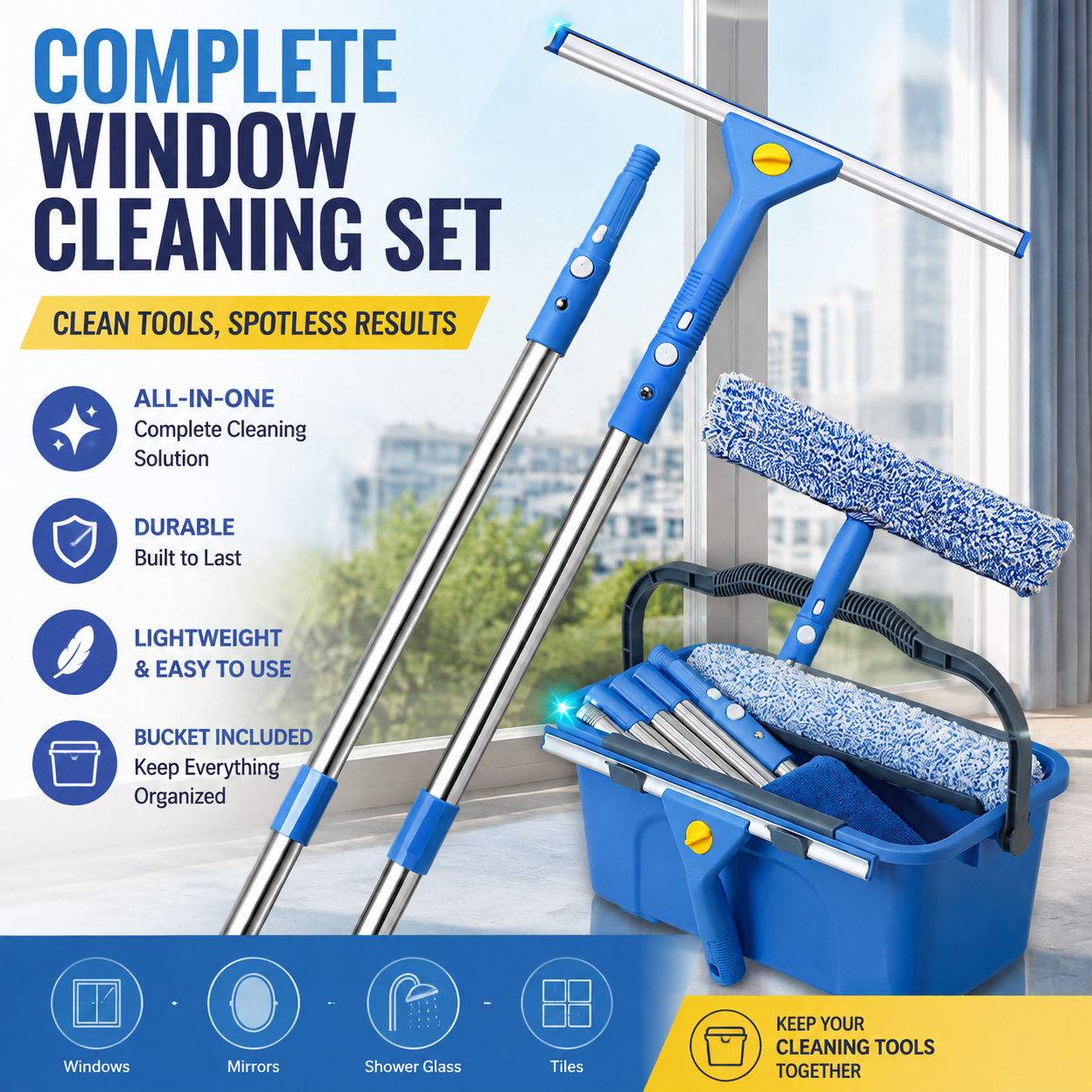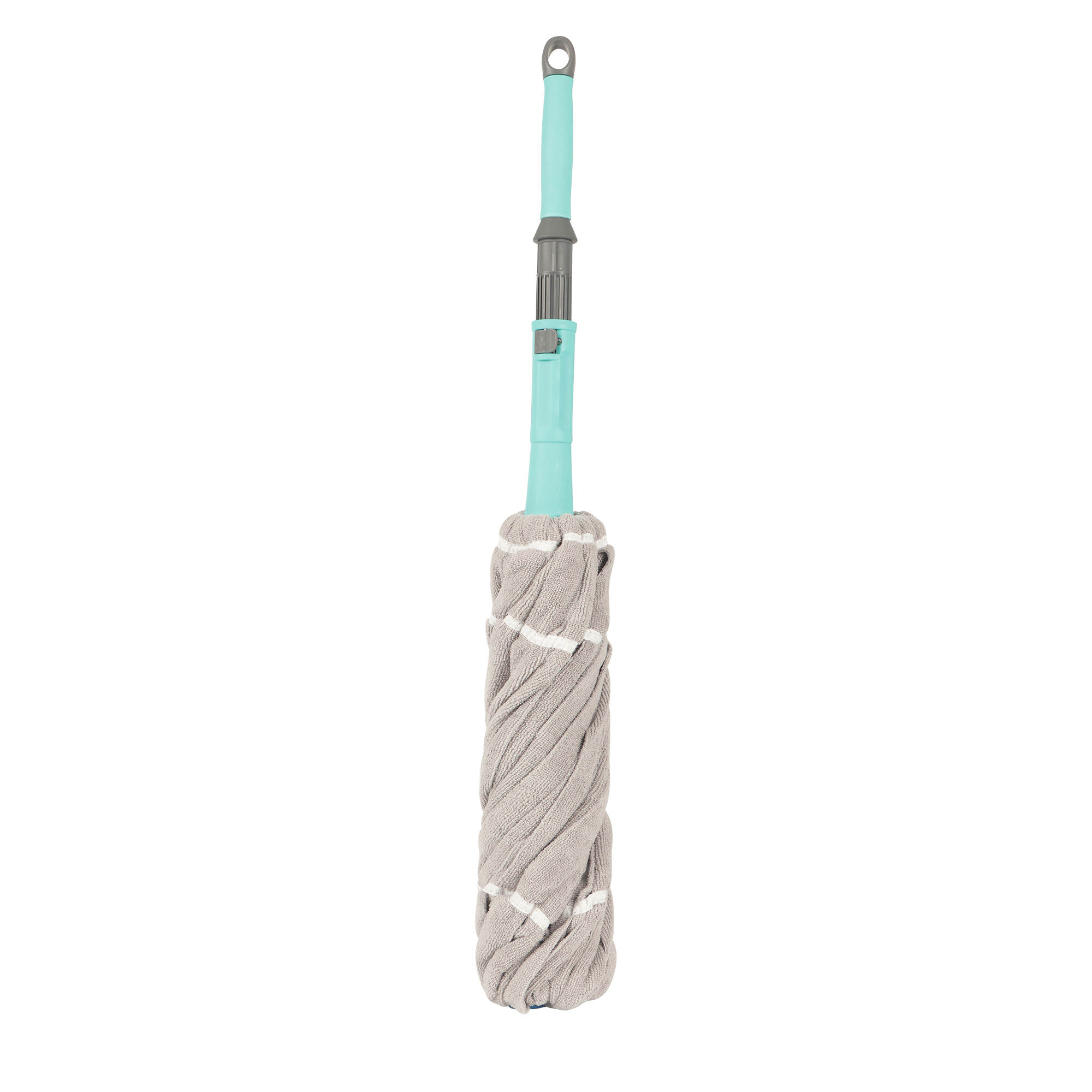
Bristle count, shape retention, head width, and the joint between head and handle. Four things a buyer could put in a purchase order today, and none of them on the packaging.
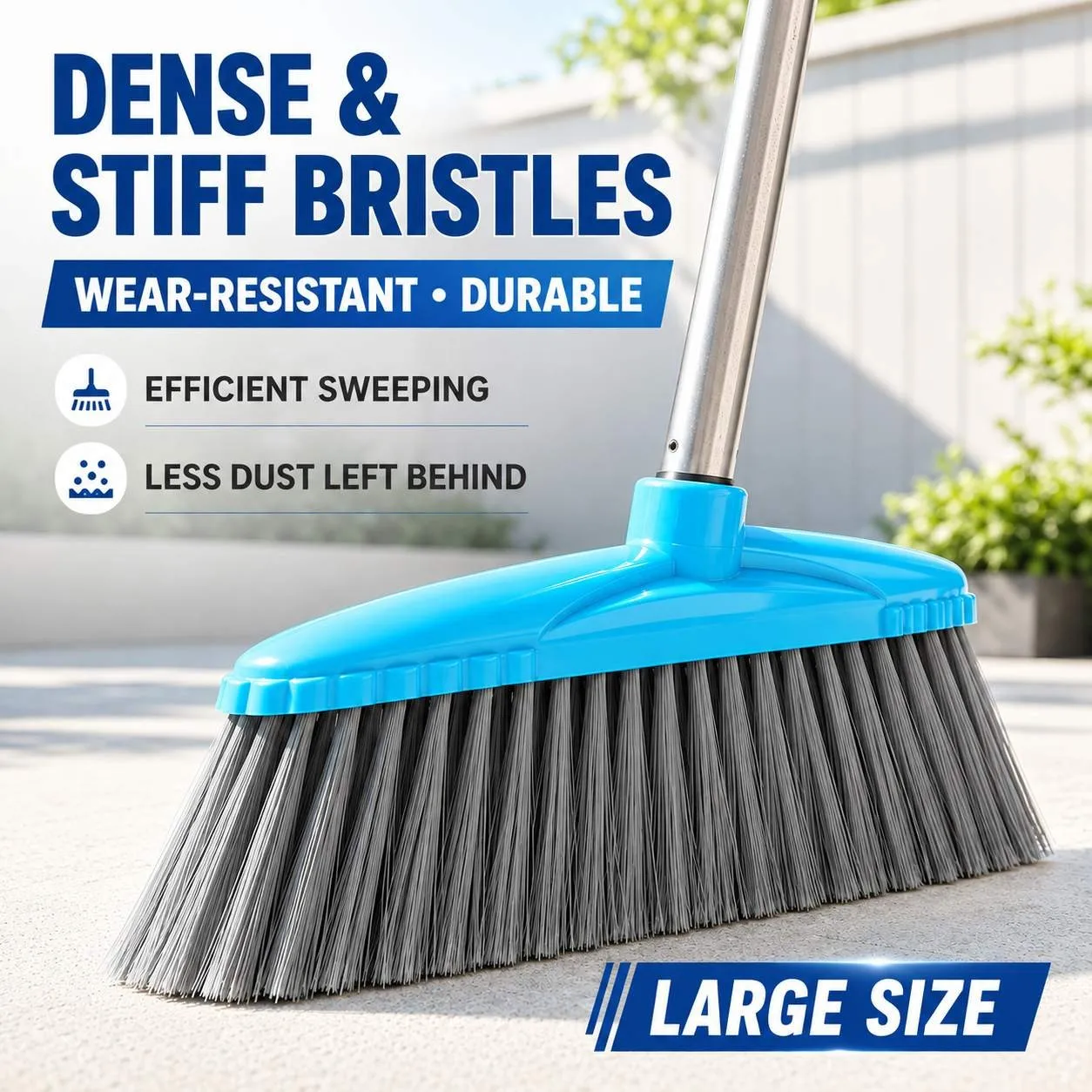
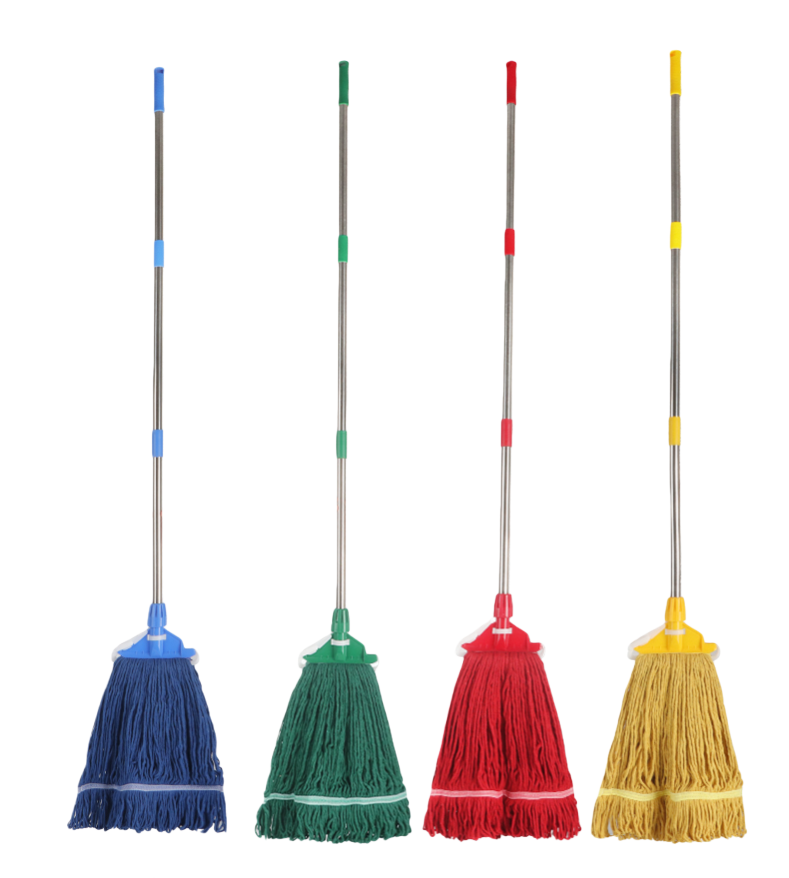
An extra-large sweeping head with dense, stiff bristles and a metal handle — the construction this article is about.
9 October 2026 · Company News
WENZHOU, China — October 9, 2026 — Walk into any shop that sells brooms and there is exactly one thing you can check before buying: press the bristles with your thumb.
Everything else that decides how the tool performs is somewhere else. How many bristles are packed into the head. Whether they return to position after a season of use. How wide the head is. How the head is fastened to the handle. Packaging rarely answers any of it.
So the thumb decides the purchase. Stiffness sells in this category because it is the only property a shop lets a buyer assess in the aisle.
Independent testing has been fairly consistent about which property actually matters, and it is not that one. In reviews published over the past two years, the broom that collected the most debris was consistently the densest one, not the stiffest.
Wirecutter tested brooms for The New York Times and reported the same result: “brooms with more bristles and denser heads were more effective than sparsely bristled brooms.” The review also put a price on stiffness. Thick, stiff bristles “can’t reach into cramped corners”; long, soft ones “fling dust around, rather than making a neat pile.” Neither extreme sweeps well.
Consumer Reports put seven brooms through side-by-side testing and concluded that finding a good one is “a tall order.” Some arrived too stiff for the job, some too soft, and a head that will not pass under furniture hands the work to a second tool.
Then there is the part of the problem that shows up later. Bristles splay. Professional repair guides describe what follows: when broom fibres stay bent out of shape, “the sweeping edge no longer makes consistent contact with the floor surface.” Owners rarely return a broom over it. The tool just works a little worse every month, and most buyers assume that is what brooms do. The internet is full of instructions for straightening bent bristles with hot water or a comb, or for hanging the broom head upwards to stop it happening. That much repair advice does not accumulate around a rare fault.
The joint usually fails before the bristles do. In owner forums, the repeated complaint is a head that has come loose, one that “comes apart with each lift of a sweep,” or a two-piece handle that unscrews itself mid-stroke. Wrapping the joint in wire is a fix people pass around.
And the failure customers actually notice is the fine dust. Southern Living ran 21 brooms through the same debris test; the winner cleared 95 percent of it, and the reviewers credited firm, flagged bristles — frayed tips that catch smaller particles. Coarse bristles clear the visible mess and leave the layer behind. That layer is what a customer sees once the floor dries.
Grand View Research puts the U.S. cleaning and hygiene tools market at USD 8.81 billion in 2023, growing at a CAGR of 4.7% to 2030. Transparency Market Research values the wider cleaning equipment and supplies market at USD 108.5 billion in 2023, growing at 6.3% a year to 2034.
The pressure is on labour. A broom that needs an extra pass, or that gets replaced twice as often, is an operating cost rather than a cheap consumable. Most of those brooms are bought today on a property nobody measured.
The testing points to a short, buyable list. All four are ordinary manufacturing decisions, and all four are usually left off the label.
1. Bristle count or row count per head. The strongest predictor of how much a broom picks up in one pass, and the first number worth writing into a purchase order.
2. What the bristle material does after repeated use. What matters is whether the bristle returns to position after load. Material that bends permanently takes weeks or months off the tool’s working life, and nothing on today’s packaging tells a buyer which behaviour they are paying for.
3. Head width. A wider head covers more floor per stroke. That is a labour calculation, and it gets more valuable every year wages rise.
4. How the head is attached to the handle. The most common failure point, and the cheapest one to design out at the factory.
Wenzhou Meishijie Household Products Co., Ltd. (“MSJ”) builds its broom and brush line to that list, and has opened the line to international importers, distributors and private-label buyers.
Its lead model, the Dense & Stiff Bristle Cleaning Broom, combines a high-strength blue plastic head with dense PET bristles on an extra-large sweeping head and a metal handle. The company describes four outcomes for it: dense bristle coverage that clears fine dust and debris in a single pass; a wear-resistant bristle material that resists bending and deformation in heavy use; a bristle layout tuned to remove more dirt with less effort; and an oversized head that covers more ground per stroke. In its published FAQ, MSJ says the broom suits concrete, yard and other hard, rough surfaces as well as indoor floors.
“The complaint we get is always the same shape. The broom pushes dust around instead of picking it up, and after a few months the bristles have leaned over and it stops working. Neither of those is about stiffness. One is how many bristles you paid for, the other is whether the material holds its line. Both are numbers a factory controls and a buyer can ask for.”
— Lin, Marketing Manager, Wenzhou Meishijie Household Products Co., Ltd.
The same construction is positioned across four buying situations, each with a different way of failing.
| Setting | What fails in the category | MSJ’s stated design response |
|---|---|---|
| Household — floors, kitchens, patios, garages | Fine dust left as a film after the visible debris is cleared | Dense bristle coverage stated to minimise residual dust |
| Commercial — offices, shops, gyms, retail | Bristles splay under daily use, then stop making floor contact | Wear-resistant bristle material stated to resist bending and deformation |
| Industrial — warehouses, workshops, factories | Narrow head means more passes and more labour per square metre | Extra-large sweeping head covering more ground per stroke |
| Trade — retail, distributors, bulk importers | Handle-to-head joint fails in service, generating returns | Metal handle on a high-strength plastic head; OEM specification available |
MSJ runs a 6,000-square-metre facility with five automated production lines, with quality control through the process and sampling inspection on every batch. That last point is the one a buyer is really relying on when a second or third order is placed against a first sample. The company states that it holds ISO 9001, ISO 14001, ISO 45001, CE, RoHS, REACH and SEDEX. The broom ships in carton bulk packing, and the company supports bulk wholesale and OEM customization.
“A distributor is not judged on the first container. They are judged on whether the second and third containers sweep the same way. That is why we would rather put a number on the bristle count and the head width than a word like premium on the box.”
— Lin, Marketing Manager, Wenzhou Meishijie Household Products Co., Ltd.
Founded in 2009 and headquartered in Wenzhou, Zhejiang Province, MSJ is a manufacturer of cleaning supplies covering mops, mop heads, mop-and-bucket sets, cleaning cloths and rags, squeegees, brooms and brushes, and yarns. The company operates a 6,000-square-metre production facility with five automated production lines and an in-house raw material capability for cotton yarn and microfiber filament. Its products serve household, commercial, industrial and outdoor cleaning applications across domestic distribution and export markets including South Korea, the Middle East, Africa, Europe and the Americas. MSJ will exhibit at the 2026 Canton Fair.
Website — www.msjclean.com
Media enquiries — clean-msj@wzmsj.cn
Tel — +86-577-64422811 | Mobile — +86-13091907807
Address — Unit 2, Building 8, Wanyang Technology City, Qianku Town, Wenzhou, Zhejiang Province, China
Product images, factory footage and certification documentation are available on request.
### END ###