Mop RFQ Checklist: 12 Specifications Buyers Must Send to Get an Accurate Quote
Last updated: October 2026 · Reading time: 8 minutes
Most mop quotations that arrive "too cheap" or "too expensive" are not pricing problems — they are specification problems. When a buyer sends a one-line inquiry such as "Please quote 5,000 microfiber mops," every factory fills in the blanks differently: one quotes a 350 g head, another a 450 g head, one includes a carton barcode, another does not.
The result is a set of numbers that cannot be compared, and a purchase decision made on price alone.
This checklist covers the 12 specifications that determine a mop's real cost. Send all twelve with your first inquiry and every reply you receive will describe the same product.
Why the first RFQ decides the whole negotiation
A mop is a low-unit-price, high-volume item. The cost difference between two visually identical mop heads is usually decided by four invisible variables: fiber grade, head weight, laundering durability, and packaging labour. None of these appear in a photo.
A factory cannot quote what has not been specified, so it quotes the version that is easiest to produce. That version is rarely the one the buyer intended.
Specifying the twelve items below does three things at once: it makes quotes comparable, it removes the room for later substitution, and it creates a written record you can hold a supplier to when the pre-shipment inspection happens.
The 12 specifications
1. Mop type and head construction
State the product family and the construction method, not just "mop."
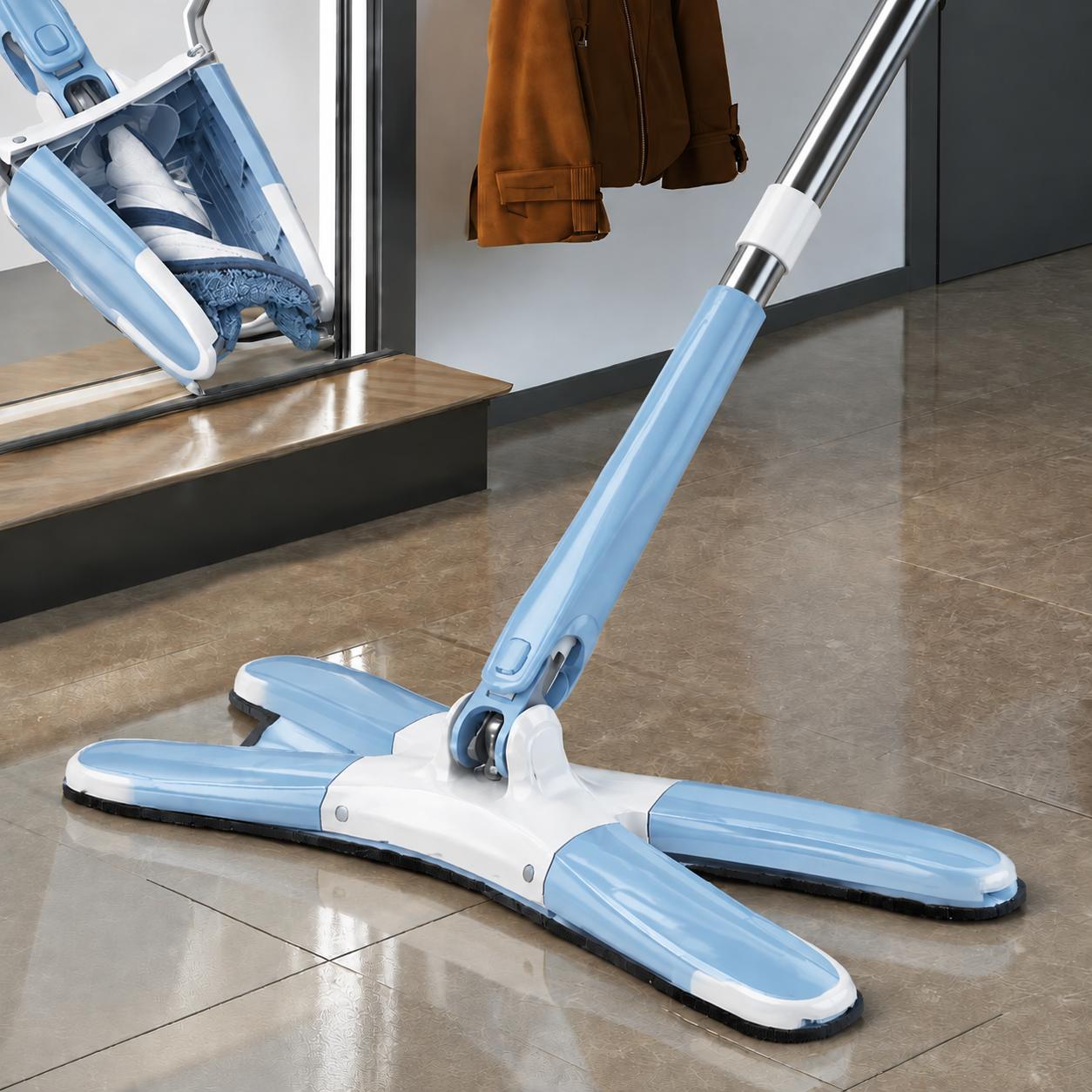
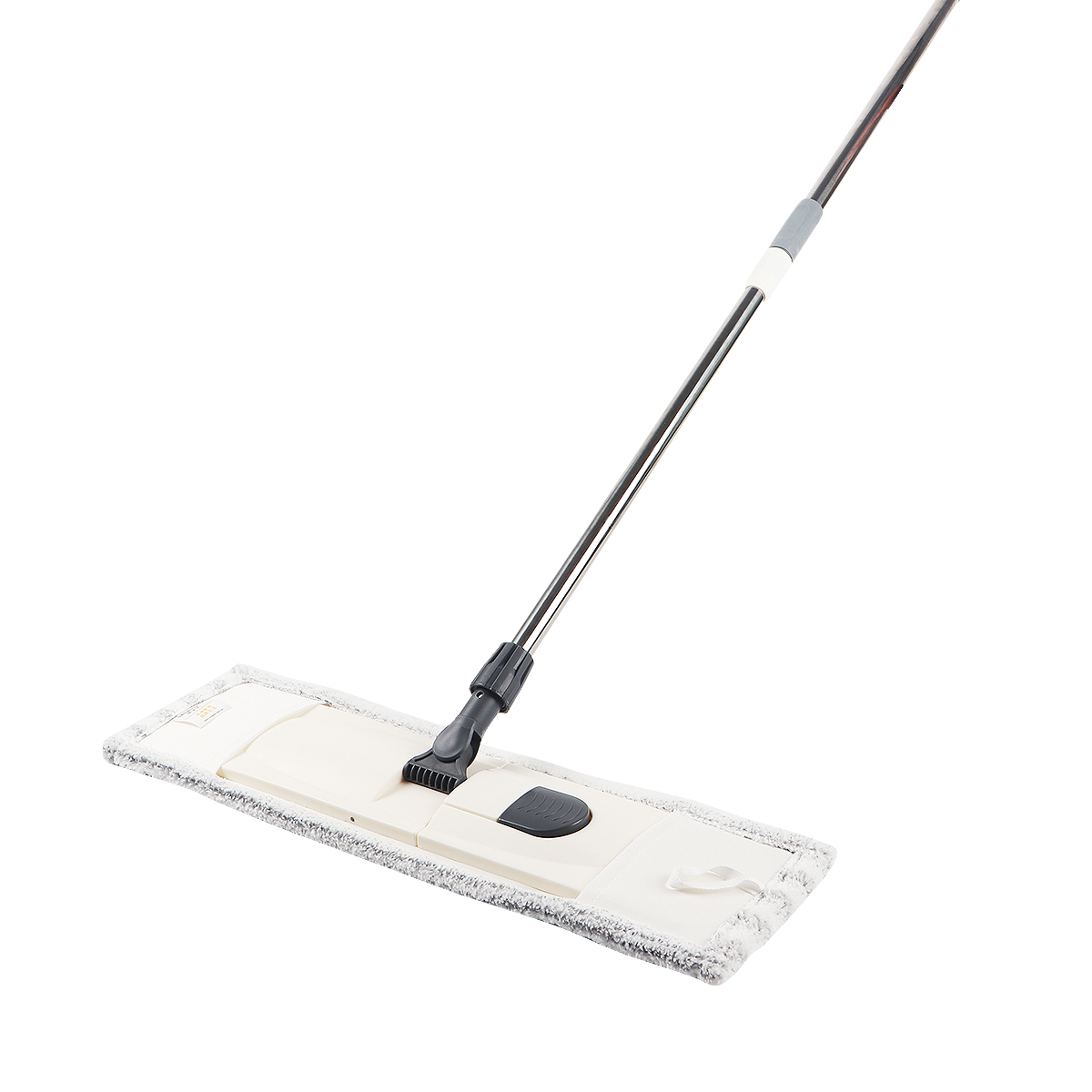
- Flat mop (cotton, microfiber, chenille) — pocket, clip, or velcro backing
- Wet string mop — screw socket, twist socket, or side-gate
- Looped-end vs cut-end — looped-end resists fraying and is specified for industrial laundering; cut-end is cheaper and sheds more
- Sponge mop — folding or roller
- Mop and bucket set — specify whether the bucket is included in the unit price or quoted separately
Construction detail belongs in the RFQ because it changes both material consumption and labour time.
2. Fiber and yarn specification
Name the fiber, the grade, and the blend ratio.
- Cotton: yarn count and whether the yarn is recycled or virgin
- Microfiber: fiber composition (for example polyester/nylon split microfiber) and fabric weight in g/m²
- Non-woven: fabric weight and bonding method
- Chenille: pile length and backing material
"Microfiber" alone is not a specification. Two mops sold as microfiber can differ by more than 40% in fabric weight.
3. Head weight and tolerance
Give the target weight in grams and the acceptable tolerance, for example "450 g ± 5% per head."
Weight is the single most common hidden variable in mop pricing. It is also the easiest thing for a factory to quietly reduce between the sample and the bulk order, which is why the tolerance must be written into the RFQ and verified at inspection.
4. Dimensions
Specify:
- Head width and length (cm)
- Head thickness or pile height
- Handle length and diameter (mm)
- Socket or thread type if the head must fit an existing handle system
Buyers who already sell a handle in their market should send the thread drawing. A 1 mm thread mismatch turns the whole shipment into a non-seller.
5. Absorption and water release
Ask for the test method, not just a claim.
A practical method: weigh the head dry, saturate it under a fixed procedure, drain for a fixed time, weigh again, and calculate water retention as a percentage of dry weight. Ask the supplier to state both the method and the result, and to confirm the result applies to the bulk production, not only to a hand-made sample.
6. Laundering and abrasion durability
State how many wash cycles the product must survive in its real use environment.
Commercial and industrial buyers typically launder mop heads repeatedly; retail buyers do not. Ask the factory for the number of cycles it has tested and the condition of the head afterwards. A quote without a durability figure is a quote for a disposable product.
7. Handle and hardware
If the handle is included, specify:
- Material (stainless steel, powder-coated steel, aluminium, plastic)
- Tube gauge and diameter
- Coating and colour
- Connector type and whether it is replaceable
Hardware is where cost is most often removed without the buyer noticing.
8. Packaging
Packaging is a cost line and a compliance line at the same time. Specify:
- Inner packaging (poly bag, header card, hang tag)
- Barcode type and placement (EAN/UPC, retail-ready or not)
- Units per carton, carton dimensions, carton gross weight
- Carton markings (SKU, PO number, country of origin, handling marks)
- Pallet configuration if the buyer receives palletised shipments
Retail-ready packaging can add more to the unit cost than a heavier mop head. Quote it explicitly.
9. Private label and branding
If the product carries your brand, state:
- Branding method (print, woven label, embroidery, heat transfer)
- Number of colours and Pantone references
- Artwork format and who supplies it
- Minimum order quantity per SKU and per colour, not just overall
Private-label MOQ is almost always quoted per colourway. A buyer who asks for "3,000 units in 4 colours" may be quoting 4 × MOQ without realising it.
10. Compliance and certification documents
Ask which documents the supplier can issue, with the scope and validity date of each.
For cleaning products exported to the EU and the US, the usual set includes:
- ISO 9001 (quality management)
- ISO 14001 (environmental management)
- ISO 45001 (occupational health and safety)
- Social compliance audit: BSCI or SMETA
- REACH compliance for materials in contact with the user, including the SVHC position
- CE marking where the product falls within a directive's scope
- Packaging compliance, including the EU Packaging and Packaging Waste Regulation (PPWR)
A certificate with no scope statement proves very little. Ask for the issuing body, the certificate number, and the expiry date.
11. Commercial terms
Fix the commercial frame in the first message:
- Incoterm (FOB, CIF, DDP) and named port
- Currency
- Payment terms
- Production lead time after deposit, and the deposit percentage
- Sample policy (free sample with freight paid by buyer, or sample charge credited against the order)
- Claims and replacement policy for defects found on arrival
Quotes in different Incoterms cannot be compared. A DDP price and an FOB price for the same mop can differ by 25–40%.
12. Volume and forecast
Give the factory the numbers it needs to price properly:
- Annual volume by SKU
- First order quantity
- Expected reorder frequency
- Seasonality, if any
- Whether the SKU range is expected to grow
Volume is what unlocks tiered pricing. A supplier that knows a first order of 5,000 units sits inside a 60,000-unit annual forecast will quote differently from one that sees a single order.
Quote comparison table
Paste this into your RFQ and ask every supplier to return it completed. Any supplier that leaves cells empty is telling you something.
| # | Specification | Unit | Supplier A | Supplier B | Supplier C |
|---|---|---|---|---|---|
| 1 | Mop type / construction | — | |||
| 2 | Fiber and yarn spec | — | |||
| 3 | Head weight (target ± tolerance) | g | |||
| 4 | Head dimensions / handle thread | cm / mm | |||
| 5 | Water retention (method + result) | % | |||
| 6 | Laundering cycles tested | cycles | |||
| 7 | Handle material and gauge | — | |||
| 8 | Packaging (units/carton, carton size, barcode) | — | |||
| 9 | Branding method and MOQ per colour | pcs | |||
| 10 | Certificates (number, scope, expiry) | — | |||
| 11 | Incoterm, lead time, payment terms | — | |||
| 12 | Unit price at 1k / 5k / 20k units | USD |
Red flags in a returned quotation
- A price far below the others, with no specification sheet attached. Either the weight, the fiber grade, or the packaging has been silently reduced.
- "All certifications available." A supplier that cannot name the issuing body and the certificate number usually does not hold the certificate in its own name.
- No video walkthrough or factory address independent of the sales office. Verify the production site, not the trading address.
- Refusal to state head weight tolerance. This is the specification most likely to drift between sample and bulk.
- A quote that ignores your packaging and branding requirements. It will reappear as a cost increase after the deposit.
What to do after the quotes arrive
- Normalise every quote to the same Incoterm, the same head weight, and the same packaging.
- Shortlist two or three suppliers and request a pre-production sample made with the bulk materials, not a hand-made display sample.
- Test the sample against the durability figure the supplier quoted in item 6.
- Approve the sample in writing, and attach it as an annex to the purchase order.
- Schedule a pre-shipment inspection against the same twelve specifications.
The RFQ you send in the first email becomes the inspection checklist eight weeks later. That is the real reason to write it carefully.
Frequently asked questions
What information should I include in a mop sourcing RFQ?
Include twelve items: mop type and construction, fiber and yarn specification, head weight with tolerance, dimensions and handle thread, absorption and water release, laundering durability, handle and hardware, packaging, private label requirements, compliance certificates, commercial terms, and volume forecast. Suppliers who receive all twelve quote the same product and their prices become directly comparable.
How detailed should a mop specification be before requesting a quote?
Detailed enough that two factories would produce the same physical item. In practice that means naming the fiber and blend, stating head weight with a tolerance, giving exact dimensions, and describing packaging. A one-line inquiry such as "quote 5,000 microfiber mops" will produce quotes for five different products.
What is the difference between a quotation and a proforma invoice?
A quotation is an offer and can usually be renegotiated. A proforma invoice is a firm commercial document issued for payment or for customs and import purposes, and it normally fixes the price, the Incoterm, and the payment terms. Always confirm which document you are receiving before arranging a deposit.
Which certifications should I ask a mop factory to provide?
For EU and US buyers the usual set is ISO 9001, ISO 14001, ISO 45001, a social compliance audit such as BSCI or SMETA, a REACH statement covering SVHC, CE marking where applicable, and packaging compliance including PPWR. Ask for the issuing body, certificate number, scope, and expiry date rather than a logo on a website.
How do I compare mop quotations from different factories?
Convert every quote to the same Incoterm, the same head weight, and the same packaging specification, then compare unit price at the same volume tier. Quotes that differ in weight, fiber grade, or packaging are not comparable at all, and the cheapest number is often the lightest product.
What should I check before approving a pre-production sample?
Check head weight against the stated tolerance, measure dimensions and handle thread, test absorption using the supplier's stated method, confirm the fiber and blend by feel and by the supplier's material declaration, inspect stitching and socket strength, and confirm the printed packaging and branding match your artwork. Approve in writing and attach the approved sample to the purchase order.
About this checklist
This checklist was prepared by Meishijie (MSJ), a cleaning products manufacturer based in Wenzhou, Zhejiang, China, producing mops, mop heads, cleaning cloths, squeegees, and brushes for domestic, commercial, and industrial use. The company operates a 7,000 m² factory with in-house yarn and raw material processing, holds ISO 9001, ISO 14001, ISO 45001, CE, REACH, BSCI, SMETA, and RoHS certification, and produces under OEM/ODM arrangements for buyers in Europe, North America, the Middle East, Africa, and South Korea. Free samples are available; buyers cover freight.
If you would like this checklist applied to a specific product, send your specification to the sales team and you will receive a quote structured against these twelve items.