A dust flat mop is a collection tool, not a preliminary to mopping. What the type does, the two ways it holds its fringe, and why width is really a pass count.
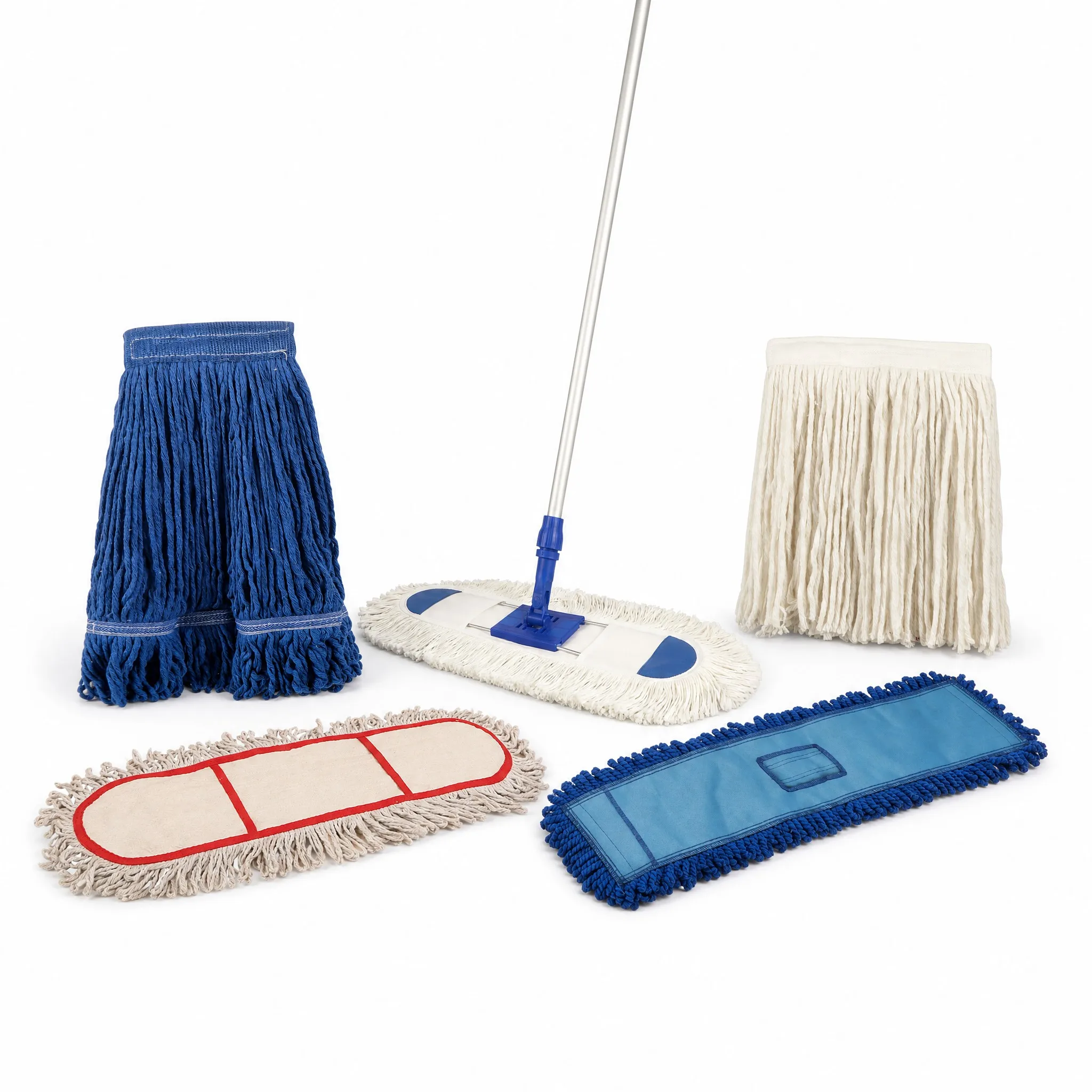
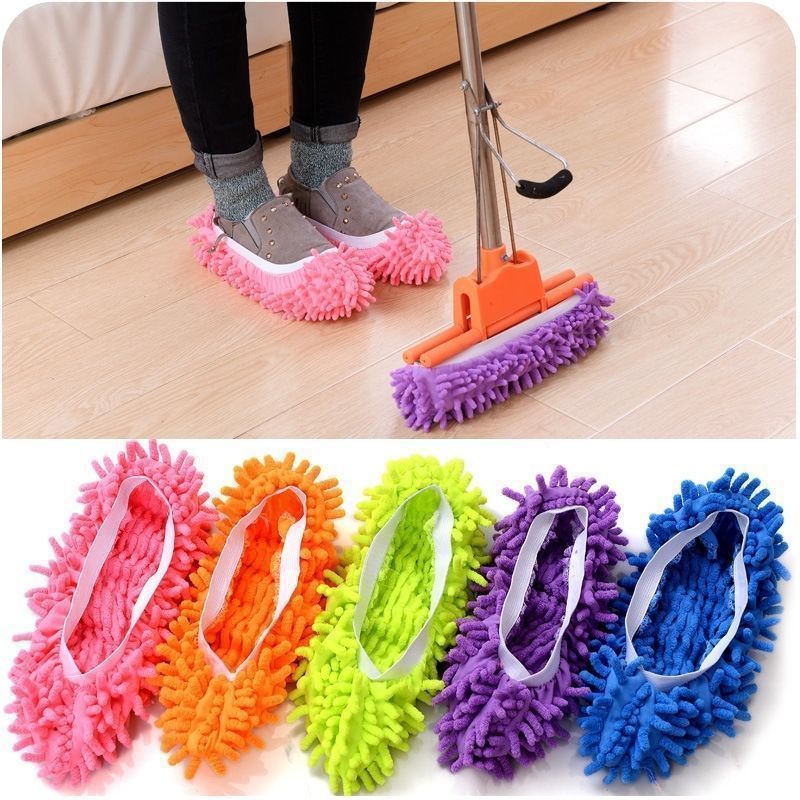
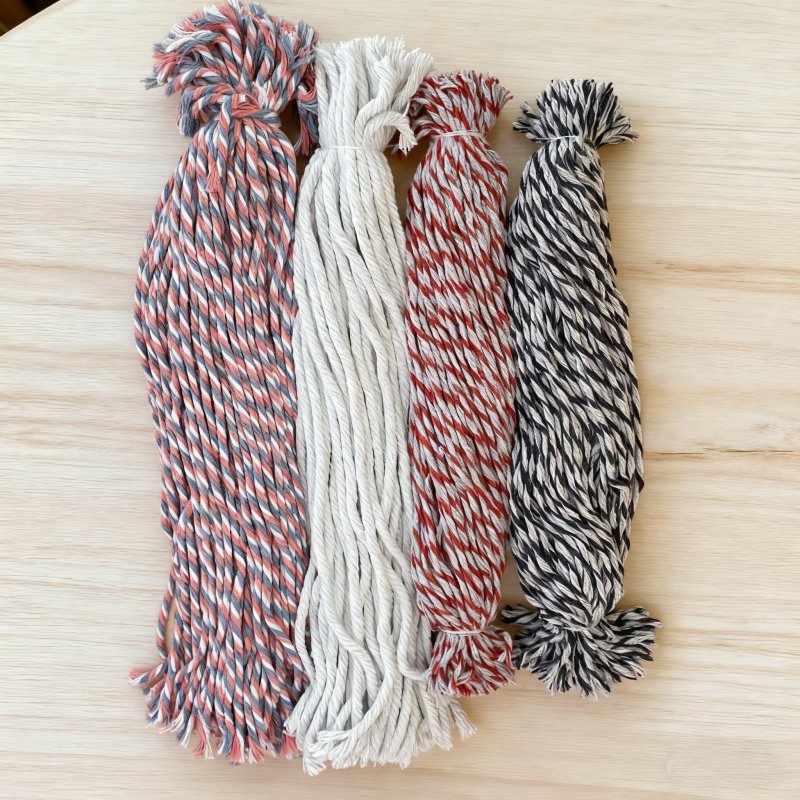
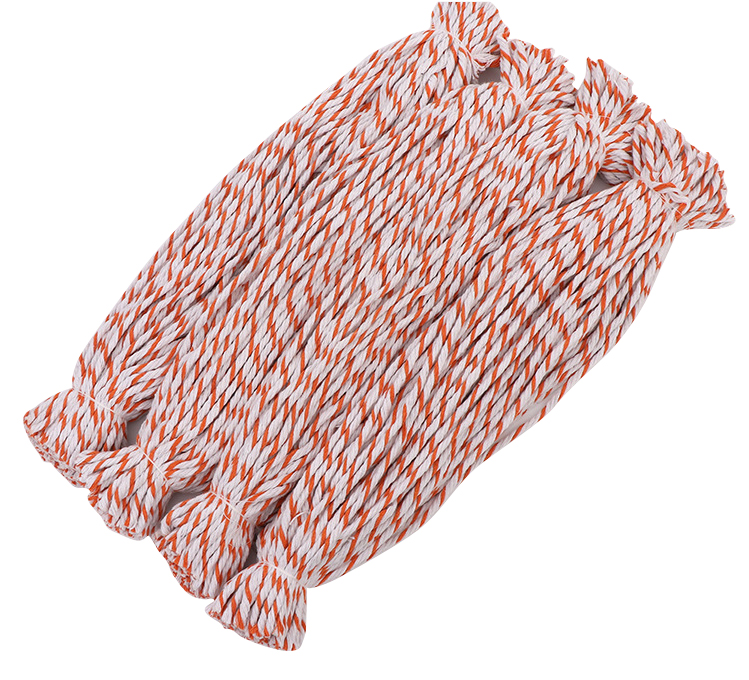
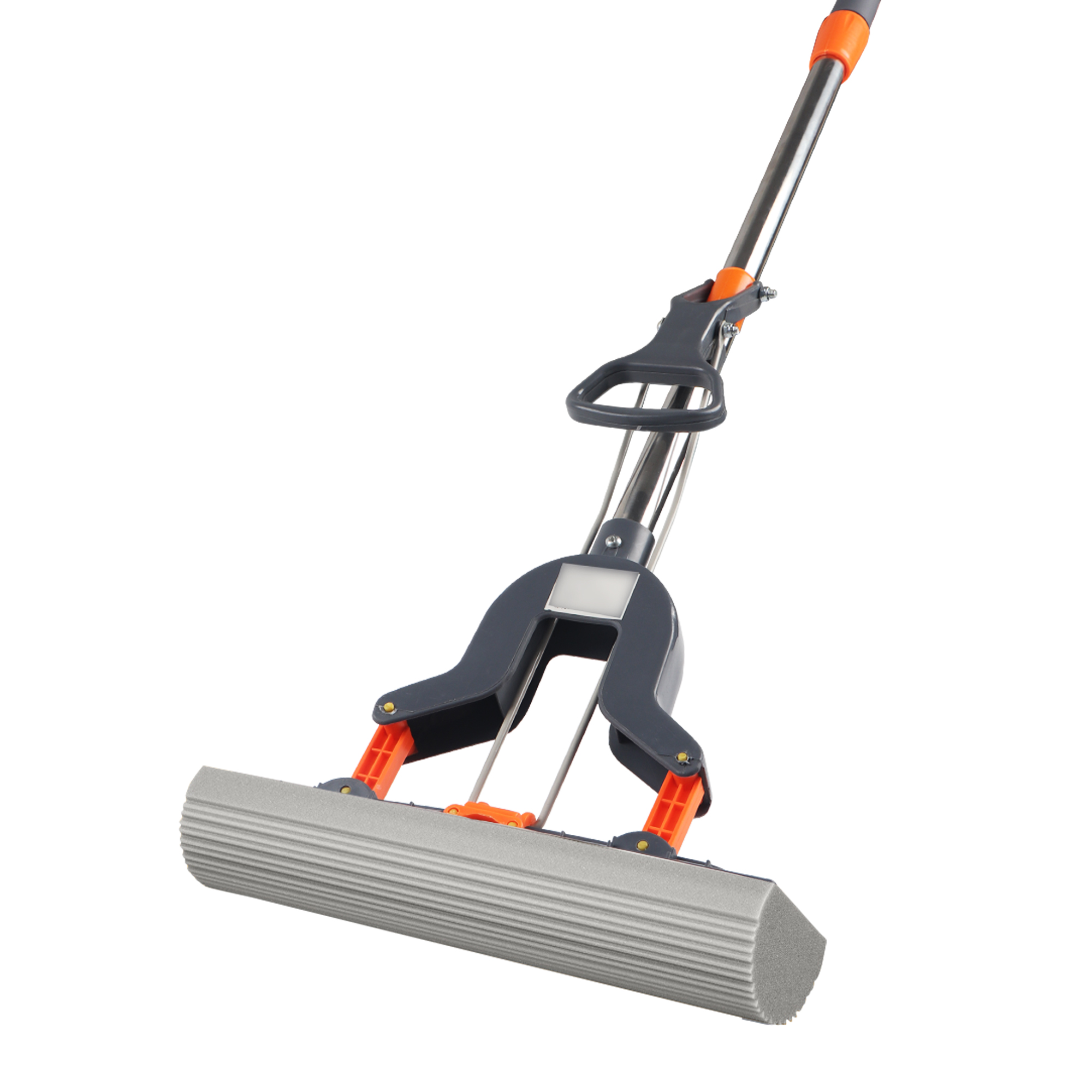
Dust flat mop heads in sleeve and bound form. Product photograph, Wenzhou Meishijie.
Wenzhou Meishijie Household Products Co., Ltd. · 27 October 2026
WENZHOU, China — Mud is not a material that arrives on a floor. It is made there, when water meets soil that should have been removed dry, and the two are pushed into a slurry that dries back into a film.
The film is what the wet pass then lifts and redistributes. That is the case for a dry pass, and the rest of this note is about the tool that makes it.
A dust head is a flat pad of cotton fringe on a swivel frame, and it works by contact and by static rather than by chemistry. The fringe lies flat, the strands separate slightly as the head moves, and loose soil transfers from the floor into the gaps between strands. Nothing dissolves, nothing is sanitised, and nothing is left wet.
The dry result is the point. A dry pass leaves a floor in a state where a wet pass can work, because soil gathered into a line can be picked up while soil that has been wetted and spread has to be lifted again.
The limits are part of the definition. A dust head does not disinfect, does not remove grease, and does not reach into a grout line. It is not a broom either: a broom pushes, a dust head gathers, and the difference shows at the edge of the fringe.
Dust heads are made in a small number of widths, and the width converts directly into passes. Take a corridor 1.8 m wide, which is ordinary in an office or a school.
| Head width | Passes | Coverage |
|---|---|---|
| 40 cm | 5 | 2.0 m, with overlap |
| 60 cm | 3 | 1.8 m exactly |
| 90 cm | 2 | 1.8 m exactly |
| 110 cm | 2 | 2.2 m, with overlap |
Between 40 and 90 cm the pass count falls from five to two. Between 90 and 110 cm it does not change at all on this corridor, because 1.8 m divides evenly by 90 and does not by 110.
A specification that reaches for the widest head to save passes is adding fringe, weight and swept area without removing a single pass. The right width is the one that divides the actual aisle, and that is a measurement of the building rather than a preference about tools.
A dust head is either a sleeve or a bound head, and the difference is structural rather than decorative.
A sleeve head is a pocket. The frame slides inside a sewn channel and holds the head flat along its whole length, so it stays square while it is pushed and comes off in one movement when a cleaner changes heads between zones.
A bound head is sewn at the edge and tied or clipped to the frame. It is cheaper to make and can be built with a wider range of fringe lengths, but it hangs from its binding rather than sitting inside a pocket. On a long frame the middle can lift slightly, and a lifted middle skips the floor.
Most photographs of a dust mop in use will show which construction it is: a pocket running the length of the head, or a binding with ties at the ends.
A sleeve head is only as flat as the frame inside it. Two numbers have to agree: the sleeve length and the frame length. A head a couple of centimetres shorter than the frame will not seat. A head longer than the frame bunches at one end and lifts at the other, and a lifted end is a strip of floor that never gets touched.
This is where mixed purchasing goes wrong most often, because the two parts are usually bought separately and the widths are nominal rather than exact. The fix is procedural: measure the frame, buy the head to that measurement, and check the first delivery against the frame rather than against the catalogue.
1. Lay it on the floor and look along its edge. One that does not sit flat at both ends will skip, and pressure will not correct a binding sewn off square.
2. Measure the sleeve against the frame you own, not against the figure in a catalogue.
3. Drag it across ten metres of the real floor, then read the fringe. Soil should be spread along the whole width, not gathered in the middle two thirds.
4. Weigh ten heads from one delivery. A wide spread across ten says more about that lot than the nominal weight does.
It fits any hard floor that carries loose soil and has to be dry before a machine or a wet pass touches it: corridors, halls, gym floors, warehouses. Wide heads suit long straight runs; a narrow head suits lobbies and tight corners where a wide one cannot turn.
It does not replace a wet mop, and it does not replace a vacuum on carpet or on a mat loaded with fine dust. A dust head moves soil; it does not extract it from a pile. Where the floor carries grease, sugar or a spill, the dry pass is irrelevant and a wet process is the whole job.
The tool is simple enough that people stop specifying it. The two things worth writing down are the width of the aisle and the length of the frame, and neither of them is printed on the head.
— Lin, Marketing Manager, Wenzhou Meishijie Household Products Co., Ltd.
The only figure this piece does not derive on the page is the set of head widths, which are the sizes the range is made in. Everything else is arithmetic or a method.
| Figure | Value | Basis |
|---|---|---|
| Head widths in common supply | 40 / 60 / 90 / 110 cm | Sizes listed across the dust flat mop range |
| Passes for a 1.8 m aisle | 5 / 3 / 2 / 2 | 1.8 m divided by width, rounded up |
What is the difference between a dust mop and a wet mop? A dust mop gathers loose soil and leaves the floor dry. A wet mop lifts soil in water and leaves the floor wet. They remove different things, and the dry one goes first.
Which width should I choose? Divide the aisle width by the head width. The comparison that matters is passes, not centimetres.
Is a sleeve head better than a bound one? A sleeve holds the head flat along its length and changes faster, which suits long frames and zone changes. A bound head is cheaper to make and comes in more fringe lengths. Neither is better without knowing the frame and the job.
Does a dry mop disinfect? No. It removes loose soil and leaves the floor dry. Disinfection is a separate step with a separate product.
How should a dust head be stored? Hung, not folded, and dry. A head stored damp in a bundle takes on the smell of the floor it last crossed.
Wenzhou Meishijie Household Products Co., Ltd. (MSJ) is a manufacturer of cleaning tools based in Wenzhou, Zhejiang Province, China. The company produces mop heads, complete mops, brushes, cleaning cloths and yarn, and supplies importers, distributors and private-label brands in Europe, North America, the Middle East and Southeast Asia.
Website: www.msjclean.com
Media enquiries: clean-msj@wzmsj.cn
Tel: +86-577-64422811 · Mobile: +86-13091907807
Address: Unit 2, Building 8, Wanyang Technology City, Qianku Town, Wenzhou, Zhejiang Province, China
Product images, factory footage and certification documentation are available on request.
### END ###
-