Drivers have been taught to distrust brushes, and the caution has a real origin. The particle a brush is holding when it crosses a panel is the part that decides the outcome.
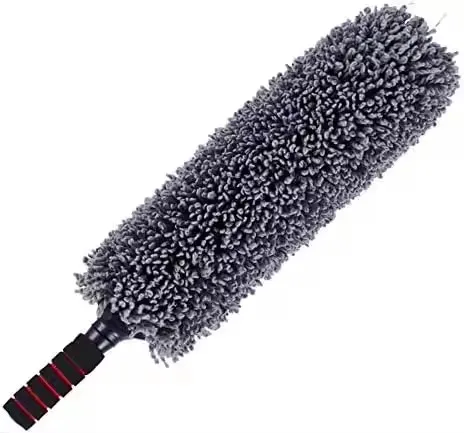
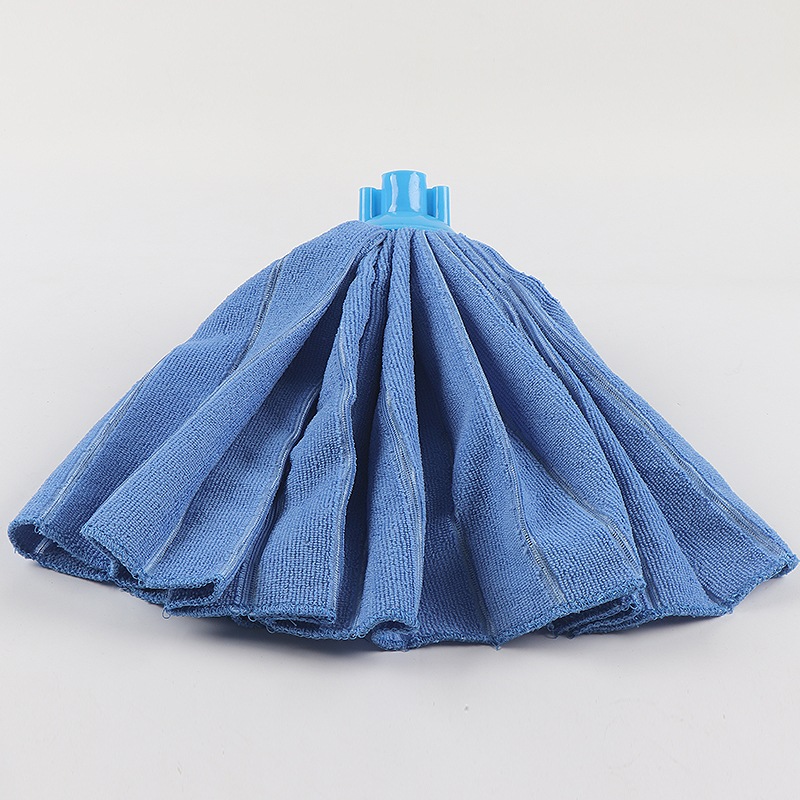
MSJ-QC005, a microfiber chenille brush for body panels, grilles and wheel faces. Product photograph, Wenzhou Meishijie.
Wenzhou Meishijie Household Products Co., Ltd. · 22 October 2026
WENZHOU, China, 22 October 2026 — Wenzhou Meishijie Household Products Co., Ltd. has released MSJ-QC005, a microfiber chenille brush for automotive body panels, grilles and wheels, at a point when the trade is re-examining what actually marks modern paint.
Ask a driver why they avoid brushes and the answer is usually about bristles. Ask a paint correction shop and the answer is about grit. The two answers are not the same claim, and the gap between them is where a brush is specified or rejected.
The caution has a real origin. Australian motoring title WhichCar, reporting on automatic washes in November 2022, put the mechanism plainly: automatic washes “are abrading your paintwork because the brushes used aren’t properly maintained.” The complaint is not that brushes exist. It is that a brush carrying the previous car’s road film across a panel will move that film against the surface.
That conclusion travels badly from a tunnel to a hand. A tunnel brush meets hundreds of vehicles a day and is maintained by someone the driver never sees. A hand brush is rinsed by the person holding it, between panels, in full view. The mechanism is the same; the maintenance is not.
A Finnish car-wash chemistry maker, Pineline, states the mechanism in its own technical notes on automatic wash brushes without limiting it to machines: “Dirt scratches during washing paint surface of the car according to the movement rate of the wash brushes. This risk also applies to hand washing.”
Read that sentence as three variables rather than a verdict. A particle marks paint when it is hard enough to cut the clear coat, when it is pressed against the surface, and when it is dragged across a distance. The fibre does not appear in that list.
Which means the useful question about any brush is not how soft the pile feels. It is how much grit the head is holding when it next touches paint, and how far it travels before that grit is released.
Rinse frequency. Every pass deposits particles into the pile. A head rinsed between panels carries a fraction of what it carried after four panels. This is the single largest variable and it costs nothing but a hose and a second.
Hand pressure. Pile compresses. Past a certain point, the fibre no longer separates the particle from the panel and becomes a delivery mechanism instead of a cushion. Pressure is chosen by the person, not by the specification sheet.
Travel distance. A loaded head dragged across a door skin has more opportunity to mark it than the same head lifted, rinsed and set down. Short strokes with a rinse between them are slower and safer, and the arithmetic favours them whenever a repaint is on the other side of the decision.
A chenille head is built as a dense field of short loops rather than a flat woven face. In a wet wash the loops hold a film of water against the panel and present many small contact points, which is why the head feels like it glides.
The same structure that holds water holds particles. A looped pile is a trap, and a trap does not distinguish between the grit you want off the car and the grit you would rather not drag along it. That is the reason a chenille head should be rinsed more often than a flat cloth, not less: the property that makes it feel gentle is the property that makes it retain what it picks up.
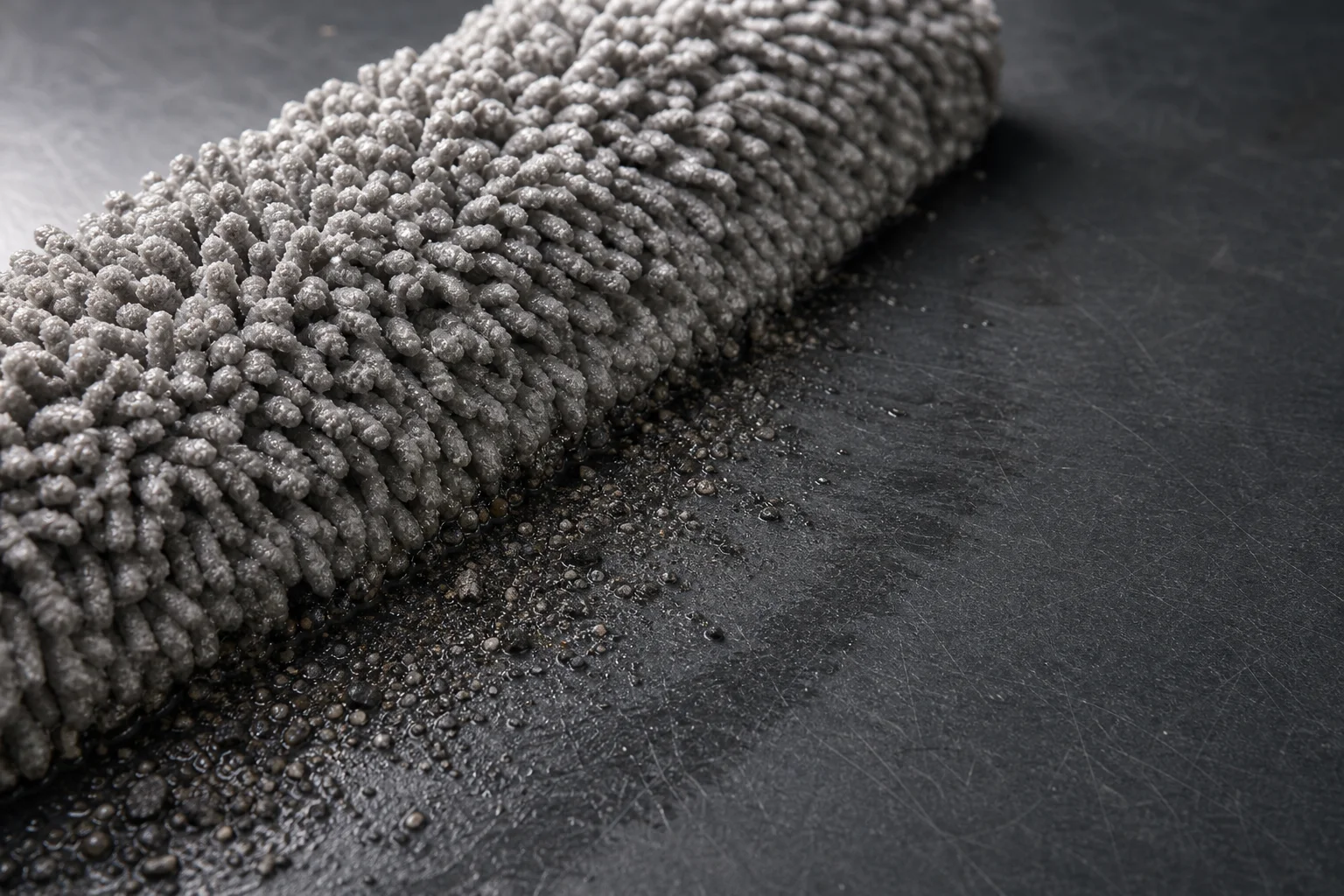
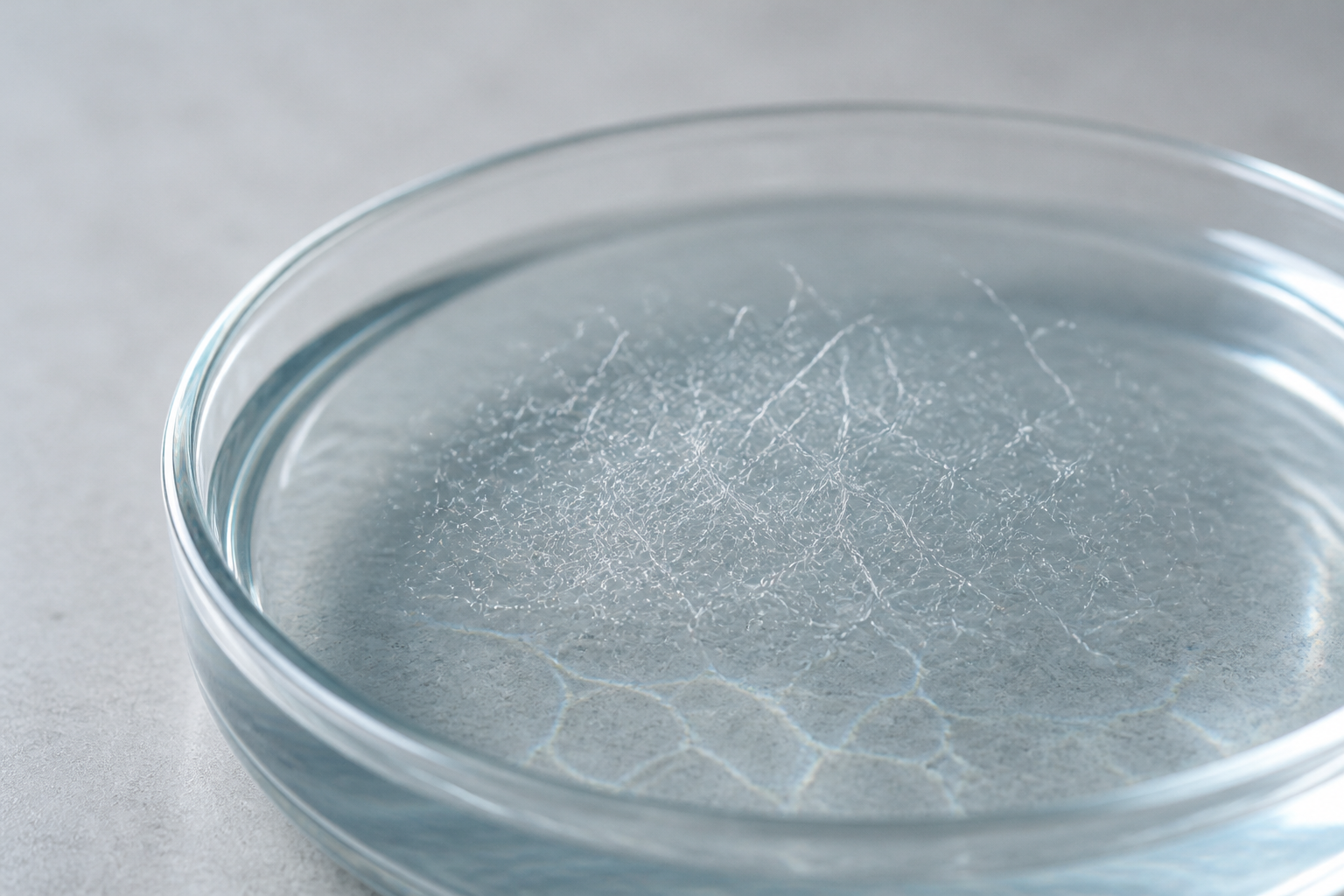
Illustration: a brush head after it has been dragged, with grit held in the pile and left along the edge. This is an editorial illustration, not a photograph of MSJ products.
Brake dust is the most abrasive material a car carries, and it is metallic. A head that has been inside a wheel arch has collected a different class of particle from the one that has only seen a door skin.
The practical answer is not a better brush. It is two brushes, marked so they cannot be confused, with the wheel head never returning to paint. Distributors selling into detailing shops tend to find this easier to sell than a single premium head, because the second brush is a cheap insurance policy against a very expensive conversation.
Pre-rinse the panel before any contact, so the loosest material leaves without being pushed. Work from the roof down, because gravity is carrying the water and the grit with it. Rinse the head after each panel, and after every wheel regardless. Keep two buckets, one for wash solution and one for rinsing the head, with a grit guard in the rinse bucket so released particles settle instead of returning. Treat the rocker panels and the lower doors last, since they hold the most film.
None of this is proprietary. It is the routine the detailing trade already teaches, and it is the routine a brush is either designed around or not.
Five checks, all of them possible in an afternoon with a bucket and a dark test panel.
1. Wet the head, load it lightly with a pinch of fine sand, and drag it once across a scrap panel in full sun. What appears is the worst case, and it tells you more than any specification of pile height.
2. Rinse the head under a tap for ten seconds and repeat the drag on a clean area of the same panel. The difference between the two passes is the retention rate of that pile.
3. Squeeze the head. A head that holds water holds particles the same way; a head that releases water on pressure will release grit into the bucket sooner.
4. Run a thumb along the handle junction and the collar. Any hard edge that can reach the panel will find a wheel rim before it finds paint, and rims are what customers notice.
5. Wash the head the way the end user will, three times, then repeat check two. A pile that stops releasing grit after three washes has a short commercial life regardless of how it felt new.
MSJ-QC005 is a microfiber chenille head on a moulded handle, built for body panels, grilles, wheel faces and the areas a mitt cannot reach. The pile is the working surface; the handle exists to keep a hand out of the wheel arch and to reach behind a grille.
It is not a wheel-woolie for the inside of a barrel, and it will not reach the back of a spoke. It is not a drying towel, and using it as one leaves a wet film that a proper drying towel then has to lift. It is not a replacement for a pre-rinse; no brush is.
And it is not scratch-free. No brush is, because the outcome depends on the particle the head is carrying at the moment of contact, which is a function of how the person uses it. What a manufacturer can do is build a pile that releases what it takes when rinsed, and say so plainly instead of promising an outcome it does not control.
“The first question a distributor asks is whether the brush scratches. The honest answer is that no brush can promise it will not, because the answer depends on what the driver picked up two panels earlier. What we can control is how much the pile holds and how readily it lets go under a tap.”
Lin, Marketing Manager, Wenzhou Meishijie Household Products Co., Ltd.
MSJ-QC005 is offered at a minimum of 5,000 pieces per colour. OEM and ODM are available on head size, pile, handle colour, logo and packaging. Samples are available for distributor evaluation; lead time and carton configuration are confirmed against the final specification, which is still being fixed for this model.
Prices are not published. Quotations are issued against a specified quantity, colour and packing configuration.
This release quotes two external statements about the mechanism and the company’s own minimum order. Everything else is procedure rather than measurement.
| Claim | Figure or statement | Source |
|---|---|---|
| Automatic wash brushes abrade paint when poorly maintained | Direct quotation | WhichCar, 28 November 2022 |
| The same dirt-scratch mechanism applies to hand washing | Direct quotation | Pineline, technical notes on automatic wash brushes |
| Minimum order | 5,000 pcs per colour | Company terms |
| Two-bucket rinse with a grit guard | Established trade practice | Autogeek forum, 2016; Silverline Car Wash, 12 July 2020 |
Does a microfiber brush scratch car paint? The fibre is softer than clear coat, and the damage attributed to brushes usually comes from grit the fibre is holding, which is why rinsing between panels matters more than pile height.
Chenille or flat microfiber for body panels? Chenille holds more water and more grit in its loops, so it suits a wet wash where the head is rinsed often. A flat microfiber cloth suits low-water methods where the cloth is folded and turned instead of rinsed.
Can one brush do wheels and paint? No. Brake dust is metallic and abrasive, and a head that has been inside a wheel arch should stay there.
How often should the head be rinsed? Between panels on a dirty car, and after every wheel. The rinse is the only step that removes the particle before it crosses paint again.
What is the minimum order, and can the handle be branded? Five thousand pieces per colour, with OEM and ODM available on head size, pile, handle colour, logo and packaging.
Wenzhou Meishijie Household Products Co., Ltd. (MSJ) is a manufacturer of household and automotive cleaning products based in Wenzhou, Zhejiang Province, China. Founded in 2009, the company produces mops, cleaning cloths, brushes, squeegees and yarn products, and supplies importers, distributors and private-label brands. MSJ exhibits at the Canton Fair and works with buyers on OEM and ODM programmes.
Website: www.msjclean.com
Media enquiries: clean-msj@wzmsj.cn
Tel: +86-577-64422811 · Mobile: +86-13091907807
Address: Unit 2, Building 8, Wanyang Technology City, Qianku Town, Wenzhou, Zhejiang Province, China
Product images, factory footage and certification documentation are available on request.
### END ###
-